


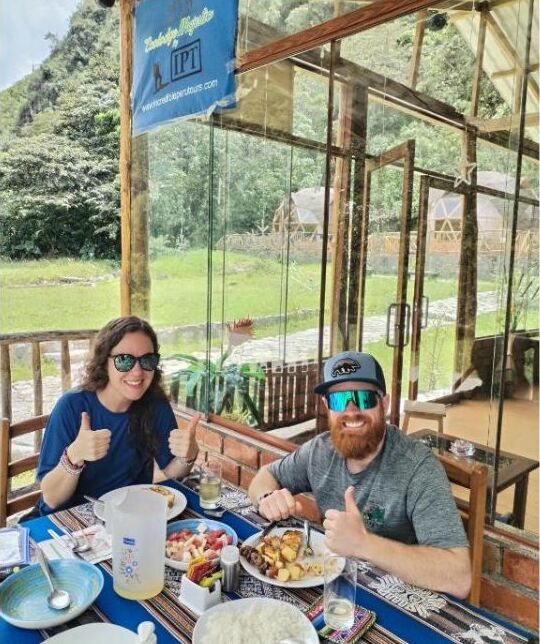
Yes, along the Salkantay Trek there are shops, restaurants, and some services, although not on every section. In the high-altitude areas, options are limited to small shops at the campsites, while towns in the jungle area have restaurants, grocery stores, and transportation. We’ll tell you what products you can buy in shops and kiosks along the Salkantay Trek route, as well as what signal, electricity, and medical care are available through the services on the Salkantay Trek. Here we focus on food: what the agency provides, what it does not, and where to eat when meals are at your own expense.
Which meals the agency prepares and which it does not
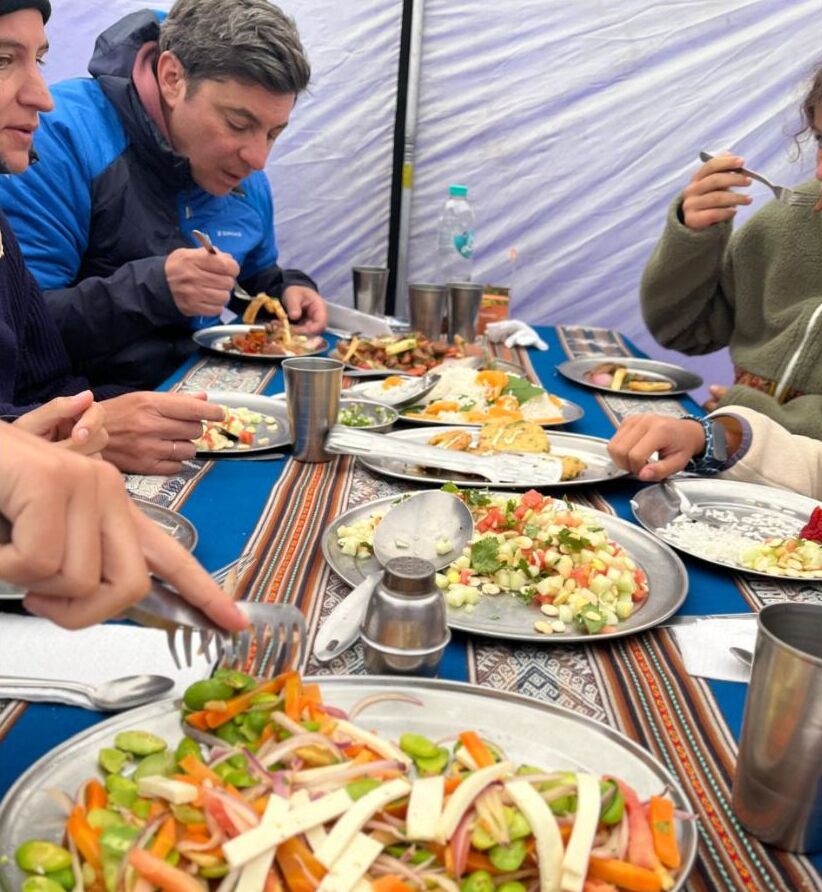
For most of the trek, you will not need restaurants. From the first lunch to the final breakfast, the agency’s cook prepares all meals at the campsites and lunch stops along the trail.
Restaurants come into play at the beginning and end of the route: breakfast on the first day, before you start hiking, and lunch on the final day in Aguas Calientes. Some agencies include one or both meals; others do not. Check your tour itinerary to find out which meals are at your own expense.
You may also look for a restaurant if your itinerary includes a hike to Hidroeléctrica or a free evening in Santa Teresa.
Mollepata: breakfast before the mountains
The bus leaves Cusco before dawn and makes its first stop in Mollepata, a farming town about two and a half hours from the city. Nearly all groups have breakfast there, at simple restaurants that know trekkers’ schedules well.
The usual offering is a full breakfast with bread, eggs, fruit juice, and a hot drink. Eat well even if you are not hungry at that hour: the first day includes the climb to Humantay Lake, and lunch comes late.
Mollepata is also the last place with well-stocked grocery stores before reaching the high-altitude section. If you forgot anything, this is the time to buy it.
Hidroeléctrica: lunch beside the railway tracks
Many itineraries pass through Hidroeléctrica, the point where the road ends and the walk alongside the railway tracks to Aguas Calientes begins. Around the station, several restaurants serve lunch to groups before the nearly three hours of walking that remain.
If your agency does not include that lunch, you will find set menus with a starter, main course, and drink. These restaurants are designed to serve large groups quickly, so service is efficient even when the place is full.
Santa Teresa: small-town food in the high jungle
Santa Teresa is the largest town on the route and has the most dining options. Some itineraries spend the night here or nearby, especially those that include the Cocalmayo hot springs.
You will find daily set-menu restaurants, rotisserie chicken places, and market stalls. It is a good place to try local fruit juices and regional dishes at lower prices than in Aguas Calientes.
Aguas Calientes: where to eat before the train
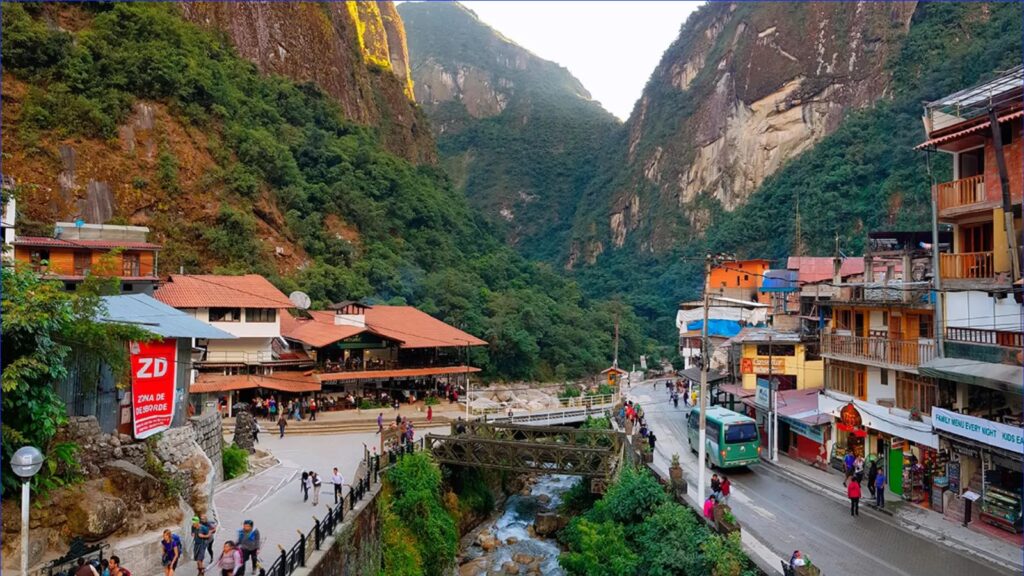
After visiting Machu Picchu, most groups have lunch in Aguas Calientes while waiting for the return train. It is the town with the most restaurants along the entire route, from simple set menus to fine Peruvian cuisine.
Three practical tips. Have lunch near the station so you do not have to rush to the train. Walk away from the main street if you are looking for more affordable set menus. And do not be swayed by promoters outside the restaurants: the places with the most street offers are not usually the best.
To estimate how much to budget for these meals, review the additional expenses you should consider when booking a Salkantay Trek.
What dishes you will find
At restaurants along the route, the daily set menu is the standard: a soup, a main course with rice, and a drink for a fixed price. It is the quickest option and is made fresh.
Common main courses include lomo saltado, grilled chicken, arroz chaufa, and, in some places, trout. Quinoa soups and broths are common in the high-altitude area and are especially welcome after a cold morning.
In the high jungle, you will find fresh fruit juices: papaya, pineapple, passion fruit, and banana. They are among the best things you will taste along the entire route.
During meals provided by the agency, your special diet is covered if you reported it when booking. At restaurants along the route, there is no such guarantee.
Vegetarian options are easy to find: almost every restaurant can prepare a meat-free dish. Vegan and gluten-free options are more limited outside Aguas Calientes. If your diet is strict, explain it clearly when ordering and bring your own snacks for the sections where you cannot find alternatives.
How to choose where to eat along the route
An upset stomach in the middle of the trek can ruin entire days. A few simple guidelines reduce the risk:
- Choose places with plenty of customers: higher turnover means fresher food.
- Choose cooked, hot dishes over raw salads.
- Order bottled drinks or infusions made with boiled water.
- For juices, ask whether the water used is boiled or treated.
- Ask your guide for a recommendation: they know which places meet standards and which do not.
Frequently asked questions
Are there restaurants at the Salkantay campsites?
Not in the sense of a restaurant open to the public. At the campsites, each group eats with its own agency, and the local shops sell drinks and snacks. Restaurants are located in the towns at the beginning and end of the route.
Can I eat elsewhere even if meals are included in the tour?
Yes, but in the high-altitude section there are no real alternatives to the agency’s food. You can choose where to eat in Santa Teresa and Aguas Calientes. Let your guide know if you will not be eating with the group so they do not wait for you.
Do restaurants along the route accept cards?
In Aguas Calientes, many do. In Mollepata, Hidroeléctrica, and Santa Teresa, it is most common to pay in cash and in soles.
What should I do if food makes me sick during the trek?
Tell your guide immediately. Rest, hydrate with oral rehydration salts, and avoid heavy meals until you feel better. If symptoms do not improve or you have a fever, the guide will arrange care at the nearest health facility.