


The history and meaning of Salkantay Mountain are linked to its status as one of the most important mountains in the Cusco region due to its historical, spiritual and cultural value. Its name is related to the Quechua language, it is recognized as an apu within the Andean worldview, and it maintains a deep connection with local communities, the landscape of Machu Picchu and traditions inherited from the Inca period.
In addition to being a high-altitude summit, Salkantay is part of a territory where the mountain, water, crops and trails have been interconnected for centuries. For those traveling through Cusco, understanding this context makes it clear that the snow-capped mountain is not merely the setting for a trekking route, but a living cultural landmark.
What does the name Salkantay mean?
The name Salkantay comes from Quechua, although its exact translation may vary depending on the source, the linguistic variant consulted and the way the term has been recorded. The most widespread interpretation links it to the idea of a rugged, strong or untamed mountain.
As with many Quechua place names, there is not always one single, literal equivalent in Spanish. Therefore, it is more accurate to present the known interpretations as linguistic approximations, without assigning the name one definitive meaning.
Origin and meaning of the word Salkantay
A common interpretation connects Salkantay with the Quechua word salqa or salka, associated in different records with the wild, rugged or undomesticated. From this perspective, the name may be understood as “wild mountain,” “rugged mountain,” or an expression close to “lord of the wild.”
There are also variations in how the word is divided and in the translation of its components. These differences stem from the diversity of Quechua and from spelling adaptations made in documents, maps and publications. For this reason, these interpretations should be used as cultural and linguistic references, not as a fixed translation.
Differences between Salkantay and Salcantay
Salkantay and Salcantay refer to the same mountain. The difference is mainly due to the spelling used to represent Quechua sounds in Spanish, a process that has produced different ways of writing many geographical names in Peru.
The spelling Salkantay is very common in tourism information, current maps and trekking routes. Salcantay also appears in cartography, institutional documents, research and official names. When searching for information, bookings or geographical references, it is useful to recognize both forms to avoid confusion.
Where is Salkantay Mountain located?
Salkantay Mountain is located in the Cusco region of southern Peru, within the Vilcabamba mountain range. Its massif rises in a mountainous transition zone between the high Andes and valleys approaching the cloud forest.
Its location explains the variety of surrounding landscapes: snow-covered summits, high-altitude lagoons, ravines, mountain forests and deep valleys. The mountain lies northwest of Cusco city and is part of the wider territory associated with Machu Picchu.
Location in the Vilcabamba mountain range
Salkantay is part of the Vilcabamba mountain range, a mountain system located in the southern Peruvian Andes. This range extends across parts of Cusco and includes several high peaks, as well as basins and routes connecting different ecological zones.
From Cusco city, the snow-capped mountain is located to the northwest. It is also regionally close to Machu Picchu, although the two places are separated by steep terrain, valleys and ravines. This territorial relationship has given Salkantay a prominent place within the Cusco landscape.
Altitude and geographical features
Salkantay Mountain reaches approximately 6,271 m a.s.l., placing it among the highest mountains in the Cusco region. Its summit features snow and ice, while its slopes descend toward high-mountain ecosystems and areas of more humid vegetation.
The surrounding area includes glaciers, lagoons, ravines and waterways fed by precipitation and snowmelt. Conditions change rapidly due to the altitude and terrain. This is not a mountain to approach without preparation: even on nearby hiking routes, cold temperatures, solar radiation and low oxygen levels require proper acclimatization.
Communities near Salkantay Mountain
Localities associated with Salkantay’s area of influence include Soraypampa, Mollepata, Limatambo, Santa Teresa and rural areas in the districts of Mollepata and Santa Teresa. These communities are distributed along access routes, valleys and areas near ravines originating in the massif.
These communities have a territorial and everyday relationship with the mountain. The snow-capped peak influences the landscape, water sources, local travel and productive activities in each area. Conditions are not identical from one community to another, as they vary according to altitude, access and local history.
Salkantay Mountain in the Andean worldview
Within the Andean worldview, mountains can be understood as protective entities connected to territory, water and community life. This perspective does not reduce snow-capped peaks to physical features of the landscape, but recognizes relationships of respect, reciprocity and collective memory.
Salkantay holds an important place within this cultural framework due to its dominant presence and its relationship with communities in Cusco. Its sacred character is expressed in diverse ways depending on the locality, family and practices maintained in each territory.
Why is Salkantay considered an apu?
An apu is a mountain or elevation recognized as a protective presence with authority within Andean traditions. The term is used especially in Cusco and other Quechua-speaking areas to refer to hills and snow-capped mountains that have a special relationship with communities.
Salkantay is considered an apu because of its powerful presence in the territory and the cultural ties built around it. As with other apus, its recognition does not depend solely on its height, but on its role in memories, stories and local relationships with the environment.
The mountain as protector of the territory
In many Andean traditions, apus are seen as guardians of communities, trails, animals and crops. This idea establishes a relationship of mutual care: people show respect for the mountain and, in turn, recognize it as a source of protection for the territory.
In the case of Salkantay, its protective role is associated with rural spaces located in its surroundings. This belief should not be understood as a uniform practice for all people in Cusco. The ways of naming, honoring and relating to the apu vary among communities and households.
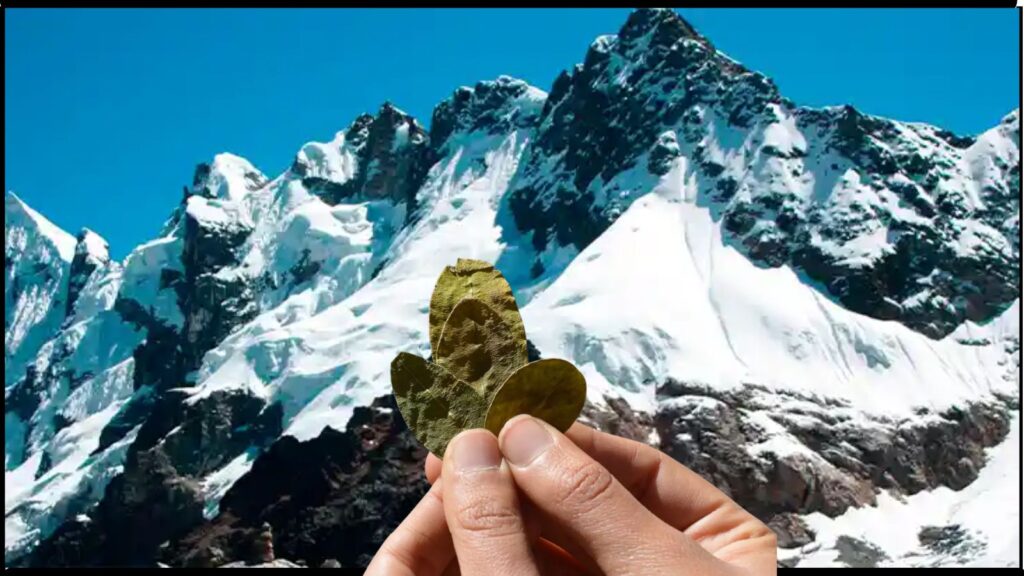
Relationship with water, agriculture and fertility
Snow-capped mountains have a practical relationship with water because their rainfall, lagoons, wetlands and ice masses influence nearby basins. In highland agricultural societies, this relationship has encouraged symbolic associations between summits, water supply, soil fertility and planting cycles.
Salkantay is connected to this perspective through the presence of water sources in its area of influence. Not all communities express this relationship through the same beliefs or rituals, but dependence on water for agriculture and livestock makes caring for these landscapes a concrete social value.
Importance of Salkantay during the Inca period
During the Inca period, mountains played a central role in religious, political and territorial organization. Summits formed part of a meaningful landscape associated with deities, productive cycles, communication routes and places of power.
Salkantay should be understood within this broader context of Inca Cusco. Although its symbolic importance is widely recognized, it is necessary to avoid attributing specific archaeological functions to it that are not supported by verifiable historical or archaeological research.
Mountain worship in the Inca world
The Incas believed that certain mountains were places of power and connection with forces related to nature and the order of the world. Summits could be part of ceremonies, pilgrimages, landscape observation and territorial organization practices.
This worship was not separate from political and productive life. Mountains were connected with water, fertility, territorial boundaries and authority. The importance of each elevation depended on its location, its links with nearby settlements and the traditions of the groups inhabiting each region.
Salkantay within the sacred territory of the Incas
Because of its height and visual presence, Salkantay formed part of the sacred landscape of the Cusco region. Its massif rises over an area connecting highlands, valleys and routes toward more humid areas, reinforcing its territorial importance.
Some studies of the Inca landscape suggest that mountains were integrated into a network of visual and symbolic references. Within this framework, Salkantay can be understood as one of the great natural landmarks of the Cusco region, without needing to attribute one specific ceremonial use to it.
Ancient trails and settlements around the mountain
The Salkantay area preserves evidence of human occupation, local trails and routes that connected high-altitude zones with mid-elevation valleys and cloud forest areas. These connections facilitated the exchange of products, the movement of people and the use of different resources.
Not all current trails correspond to original Inca roads. Some modern routes follow natural passes used for a long time, while others were adapted or opened for local activities and tourism. It is important to distinguish documented archaeological routes from contemporary commercial itineraries.
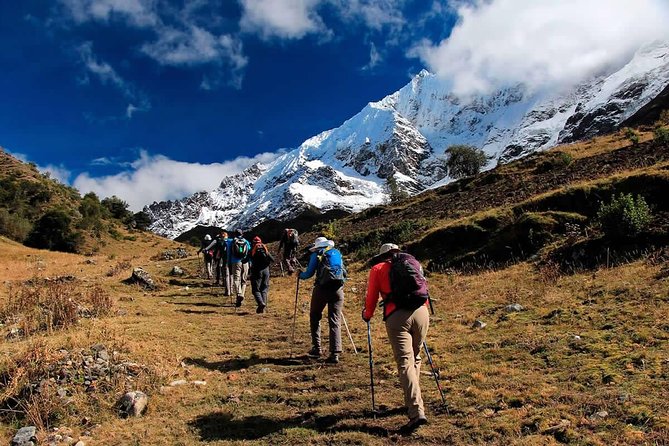
Ceremonies and traditions linked to Salkantay express forms of respect for the mountain and the earth. These practices take place in community, family or ritual contexts and should not be treated as spectacles for visitors.
Customs may include offerings, words of gratitude and requests related to well-being, water or harvests. Their performance depends on the community, local dates and the people responsible for leading each practice.
Offerings made to the mountain
Offerings dedicated to apus are often known as payments to the earth or despachos. They may include coca leaves, seeds, flowers, colored wool, sweets, beverages or other elements that hold symbolic meaning within each ceremony.
The composition of an offering is not fixed, and its meaning depends on the cultural context. In many cases, someone knowledgeable about the tradition guides its preparation and presentation. For visitors, the appropriate attitude is to observe respectfully, ask permission before taking photographs and not participate without an invitation.
Rituals of gratitude and request
Some ceremonies are held to give thanks for available water, harvests, animal health or protection received during a journey. Others may include requests for well-being for a family, a community or an upcoming agricultural activity.
These practices reflect a relationship of reciprocity with the territory. They should not be presented as formulas for guaranteed results or as mandatory activities for anyone visiting Cusco. Their value lies in the meaning they preserve for the people and communities who practice them.
Traditions maintained by local communities
Some communities near Salkantay preserve stories, festive dates, forms of gratitude and everyday references linked to the mountain. These expressions may appear in family life, agricultural activities, livestock farming and community gatherings.
Traditions are not identical in every locality. Some families maintain practices with greater continuity, while others have adapted them to social, economic and religious changes. This diversity is part of the cultural vitality of the Salkantay territory.
Myths and legends of Salkantay Mountain
The myths and legends of Salkantay Mountain are part of Cusco’s oral heritage. These stories convey ways of interpreting the landscape, explaining the power of mountains and expressing ties between apus and people.
Legends should not be confused with verifiable historical facts. Their value does not depend on being archaeological evidence, but on their ability to preserve memory, local identity and teachings passed down from generation to generation.
Traditional stories about the origin of the mountain
There are oral versions that describe Salkantay as a mountain of great character, connected to the forces of nature and the protection of nearby territories. Some stories explain its sacred condition through disputes, alliances or ties between great mountains.
These narratives vary according to the community and the person telling them. There is no single version that can be considered official. Listening to them in context helps visitors understand how local populations interpret a summit that has shaped their horizon for centuries.
Legends of Salkantay and other apus of Cusco
Several legends link Salkantay with other apus of Cusco, such as Ausangate, Verónica or Pachatusan. In some stories, mountains appear as beings with will, kinship ties, rivalries or responsibilities over different areas of the territory.
The versions do not always coincide. A story collected in one community may differ from another told in a nearby valley. Therefore, it is preferable to present them as local expressions of a diverse oral tradition, without blending them as though they were a single historical account.
Stories passed down through generations
Oral tradition keeps Salkantay’s stories alive through family conversations, communal work, celebrations and travel throughout the territory. Stories are often shared by elders, local authorities, cultural guides and families familiar with the area.
This transmission also changes over time. New generations may reinterpret stories without necessarily losing respect for the mountain. Protecting oral memory means listening to communities and recognizing that their narratives have their own authors, contexts and meanings.
Relationship between Salkantay and Machu Picchu
Salkantay and Machu Picchu are connected by their regional proximity within the Vilcabamba mountain range, by landscapes linking the highlands with the valleys, and by the cultural value attributed to mountains in the Cusco region.
This relationship does not mean that both places form a single archaeological unit or that every current trail is of Inca origin. Their connection is geographical, scenic and cultural: the Salkantay massif forms part of the vast mountainous setting surrounding the Machu Picchu area.
Geographical connection between both mountains
The Salkantay massif is located within the Vilcabamba mountain range, as are the landforms surrounding Machu Picchu. Between them stretches a territory marked by deep valleys, rivers, ravines and rapid changes in altitude.
From certain high areas of the region, the presence of large snow-capped mountains helps reveal the scale of the Cusco landscape. Machu Picchu is located at a lower elevation than Salkantay, in an environment where mountains meet cloud forest vegetation.
Salkantay within Machu Picchu’s sacred landscape
Some researchers have interpreted that mountains visible from or related to the surroundings of Machu Picchu may have formed part of a ceremonial and symbolic landscape. These proposals are based on the importance the Inca world gave to landforms, orientations and visual relationships with summits.
Salkantay is often included in these interpretations because of its regional significance and its location within Vilcabamba. However, these views should be approached with caution, as the degree of direct ceremonial relationship between each mountain and specific areas of Machu Picchu may be a subject of academic debate.
Ancient routes between the Andes and the cloud forest
The Salkantay area was part of historical connections between the highlands and cloud forest territories. These routes enabled the movement of people and the exchange of products from different ecological zones, such as corn, coca, tubers, fibers and other goods.
Today’s tourist routes sometimes use natural corridors that have been traveled since ancient times, but they should not automatically be identified as original Inca roads. To learn about the history of a specific section, it is best to consult documented archaeological or local information.
Cultural importance of Salkantay today
Salkantay remains culturally significant for communities in Cusco and has also become a tourism symbol of the region. Its image brings together references to high-mountain nature, Quechua identity and landscapes linked to Machu Picchu.
This visibility creates economic opportunities related to tourism, but it also brings responsibilities. Visits should respect communal spaces, local decisions and the environmental fragility of a mountain affected by climate change and a growing number of travelers.
Meaning for Andean communities
For different communities in Cusco, Salkantay continues to be a spiritual, territorial and cultural landmark. Its presence is related to the everyday landscape, water resources, family stories and forms of respect toward mountains.
Not all people in the Andes interpret or practice these relationships in the same way. Beliefs depend on factors such as community of origin, family history, economic activity and social transformations. Recognizing this diversity avoids oversimplifying a complex cultural reality.
Salkantay as a symbol of the Cusco region
The snow-covered silhouette of Salkantay represents one of Cusco’s most recognizable landscapes. It appears in the region’s cultural and tourism promotion because of its connection with hiking routes, high-altitude lagoons, rural communities and the corridor toward Machu Picchu.
Its value as a symbol also requires a responsible perspective. Promoting the mountain should not be limited to using its image, but should include information about its cultural context, environmental challenges and the respect it deserves from those who live in its area of influence.
Tourism, mountaineering and Salkantay Trek
The snow-capped mountain attracts travelers interested in multi-day hikes, mountaineering and high-altitude landscapes. The Salkantay Trek is one of Cusco’s best-known routes and is often chosen as an alternative way to reach the Machu Picchu area while crossing high mountains and cloud forest.
Tourism provides income for muleteers, cooks, guides, accommodations and local communities, although it also increases pressure on trails and waste management. Those planning this route should check acclimatization, weather conditions, permits and logistics. If they need to arrange an itinerary, transportation or availability, they can contact the Salkantay.tours team directly.
Salkantay Mountain and climate change
Climate change affects snow-capped mountains and glaciers in the tropical Andes, including the Salkantay area. Ice loss gradually transforms the landscape and may influence water systems, high-altitude ecosystems and the activities of nearby populations.
These changes should be analyzed using scientific data and local monitoring, without resorting to alarmist claims. Conserving Salkantay requires considering both environmental protection and respect for communities and their cultural ties to the mountain.
Salkantay Glacier retreat
Glaciers in the tropical Andes have recorded a reduction in surface area over recent decades, a trend documented by scientific research in several mountain ranges in Peru. Salkantay’s ice is also exposed to changes in temperature, precipitation and other atmospheric conditions.
The exact scale of retreat may vary according to the period evaluated, the measurement method and the glacier sector analyzed. Therefore, any figure concerning surface loss should come from updated sources, such as specialized studies, environmental agencies or institutions dedicated to glacier monitoring.
Changes in the landscape and water sources
Ice reduction can alter the appearance of slopes, the formation of lagoons and the seasonal behavior of certain water sources. During some stages, snowmelt may temporarily increase water flow, but in the long term, declining glacier mass can reduce that contribution during dry periods.
These processes also affect wetlands, high-altitude vegetation and water-dependent activities. Conditions are not the same in all basins, so local assessments are needed to understand the effects on agriculture, livestock, consumption and tourism.
Conservation of natural and cultural heritage
Protecting Salkantay means caring for both its ecosystems and the cultural practices linked to the mountain. Proper trail management, waste controls, responsible water use and environmental education help reduce the impacts of visits.
Responsible tourism also involves respecting community rules, hiring formal services when appropriate, not leaving trash on the trails and avoiding restricted areas. Conservation will be more effective if it includes the participation of those who live and work in the territory.
Frequently asked questions about the history and meaning of Salkantay
These answers address common questions about the name, sacred value and cultural relationship of Salkantay Mountain. Traditions may vary among communities, so the information should be understood as a general and respectful guide.
What does Salkantay mean in Quechua?
Salkantay is commonly interpreted as “rugged mountain,” “wild mountain” or an expression related to the wilderness. The most widespread explanation links it to the Quechua word salqa or salka. However, there are linguistic variants and different translations depending on the source consulted.
Why is Salkantay a sacred mountain?
Salkantay is considered an apu within the Andean worldview. Apus are mountains recognized as protectors of the territory and connected with water, crops, animals and the well-being of nearby communities.
What importance did Salkantay have for the Incas?
Salkantay formed part of the sacred and territorial landscape of the Inca world. During that period, mountains had great religious and symbolic importance, in addition to being related to routes, natural resources and the organization of territories.
What legends exist about Salkantay Mountain?
There are oral stories linking Salkantay with other apus of Cusco, the protection of communities and traditional explanations about the origin or character of the mountain. Versions vary by locality and do not constitute verifiable historical facts.
What relationship does Salkantay have with Machu Picchu?
Both are located within the mountainous environment of the Vilcabamba mountain range. Salkantay forms part of the geographical and symbolic landscape associated with the Machu Picchu region, although they are separated by valleys, rivers and highly complex terrain.