


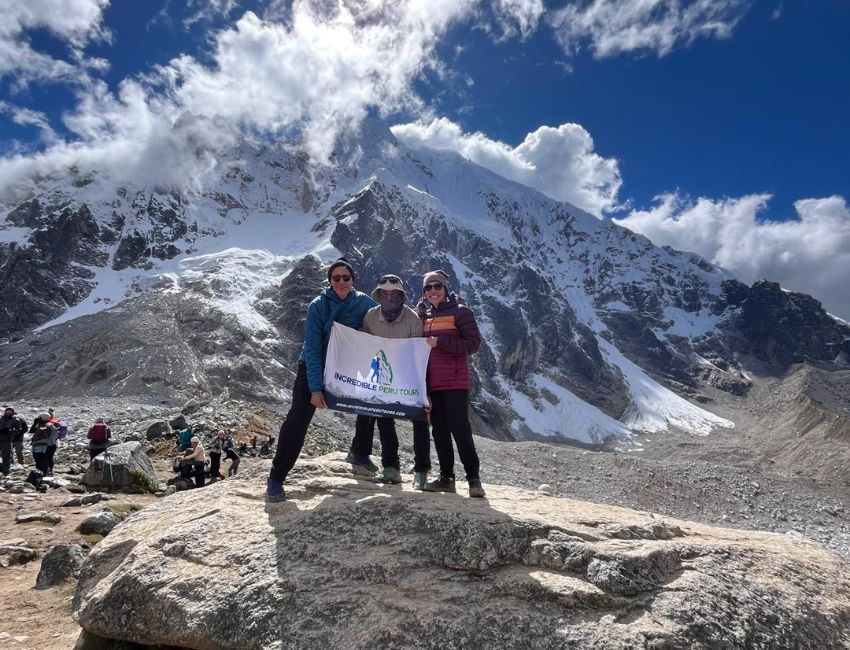
Almost every agency sells the Salkantay Trek with the same itinerary: Soraypampa, the Salkantay Pass, the high jungle, Hidroeléctrica, and Machu Picchu. On paper, they are identical. The difference shows up on the trail, when you see how many people your guide is looking after, what is on your plate at 4 000 m s. n. m., or the condition of the tent where you sleep. Choosing well is not about finding the lowest price or the flashiest website, but about asking the right questions before you pay. This guide explains what to review in every proposal and how to tell a solid service from one that only appears to be.
What the price of a Salkantay Trek really includes
Two proposals at the same price can include very different things. Before comparing amounts, compare lists.
What should be included
A complete service covers pickup from your hotel in Cusco, transportation to the start of the hike, a guide throughout the route, accommodation along the way, meals from the first lunch to the final breakfast, mules to carry part of your luggage, entry to Machu Picchu, the bus up and down to the sanctuary, and the return to Cusco.
What is usually charged separately
Breakfast on the first day, lunch on the last day, sleeping bags, trekking poles, entry to the hot springs along the route, and community fees for certain sections. None of this is irregular, but it is best to know about it so the final price does not come as a surprise.
The return journey details
Ask how you return from Machu Picchu to Cusco. Some agencies include the train to Ollantaytambo, while others have you walk back to Hidroeléctrica and then take a bus, which adds several hours to the final day. Both options are valid, but they do not cost the same, and the level of fatigue is not the same either.
The guide: qualifications, languages, and number of travelers they look after
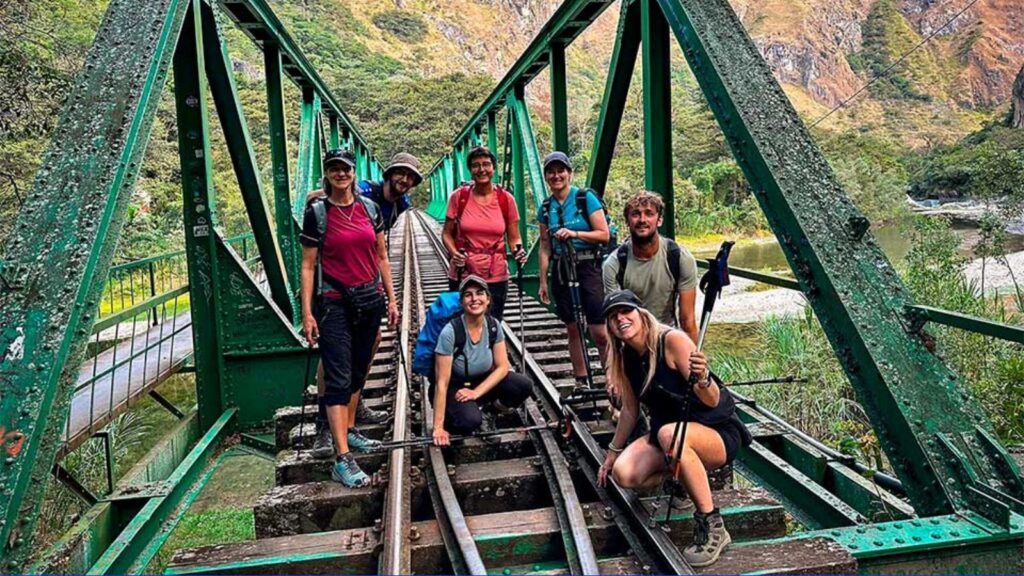
The guide is the person who decides whether you continue or stop when the altitude becomes challenging, so this is the factor that matters most in your choice.
Mountain training and experience
Ask whether the guide is a certified tourism professional and how many times they have completed the route. Also ask whether they have first-aid training and carry a first-aid kit and oxygen during the pass crossing. A serious agency answers these questions directly.
Guiding language
Many groups are organized in English because it is the common language. If you prefer explanations in Spanish, request it in writing when booking. During high season, some agencies arrange bilingual groups, where the guide divides their time between two languages.
Guide-to-traveler ratio
A guide with eight travelers can keep an eye on everyone. With sixteen, they cannot. Ask whether the group has only one guide or a lead guide with an assistant, especially if the group exceeds ten people.
Group size and how it changes the experience
Salkantay groups range from two to more than twenty people. Each size has its own logic.
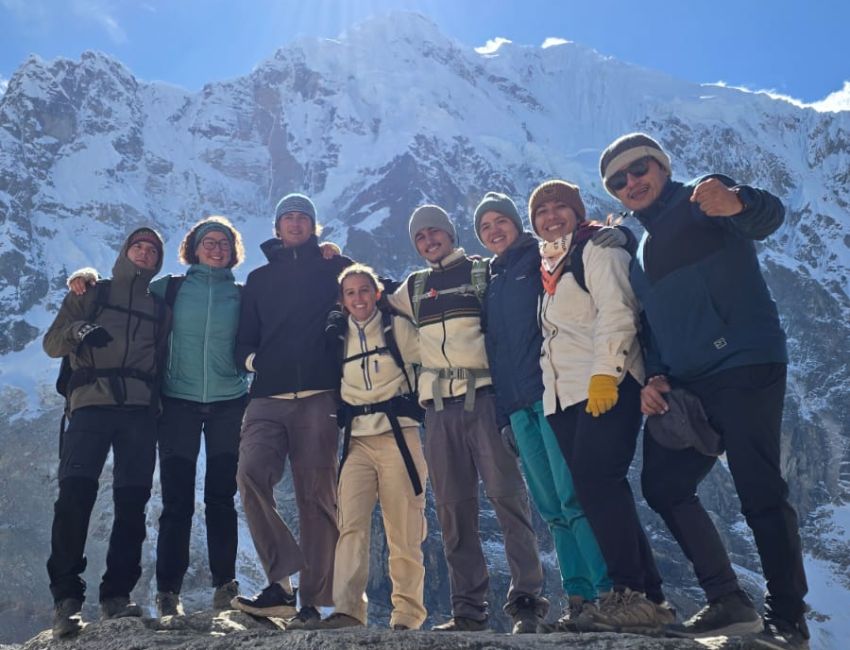
A small group of up to eight hikes at everyone’s pace, reaches the campsites earlier, and receives better attention at mealtimes. A medium-sized group, from eight to twelve, is the usual balance between price and comfort. Large groups make the tour cheaper, but they force everyone to wait for the last person at every stop and turn the climb to the pass into a line.
Ask the agency for the maximum number of travelers per group, not the average. The maximum is what you may end up with in July.
You hike between six and eight hours a day, several of them above 4 000 m s. n. m. What you eat directly affects how you finish each day.
A good agency brings its own cook, serves three hot meals a day, and offers snacks for the trail. Ask whether the cook travels with the group or whether meals are prepared by a third party at each stop. Also ask whether boiled or treated water is available to refill your bottles, because buying bottled water on the route is expensive.
If you are vegetarian, vegan, celiac, or have any food intolerance, ask how they handle your specific menu. The right answer is specific, not a simple yes.
Included equipment and equipment you rent
The condition of the equipment is among the hardest things to check from afar and one of the things you notice most when it is time to sleep.
Ask what type of accommodation the agency uses each night, whether the tents are four-season tents and how often they are replaced, and what temperatures the rental sleeping bags can handle. On nights in Soraypampa, the thermometer can drop below zero between June and August.
Request recent photos of the campsites and equipment. An agency that uses what it shows has no problem sending them. To compare accommodation options along the route in more detail, check our guide to Salkantay Trek agencies with campsites.
Mules, muleteers, and treatment of the support team
Behind every group are muleteers, cooks, and assistants who almost never appear in website photos. How the agency treats them says a great deal about how the rest of the service works.
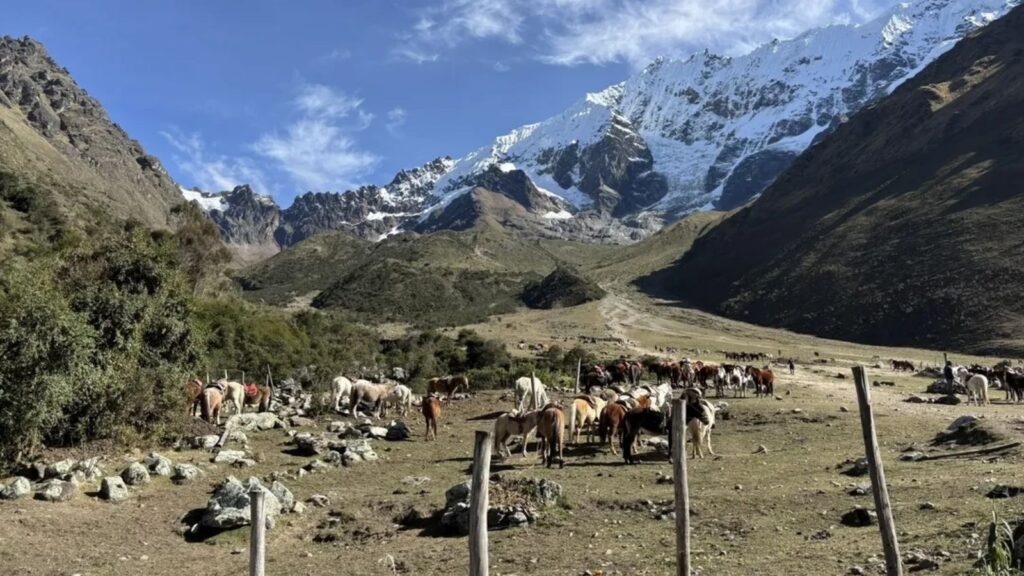
Ask how many kilos of your luggage the mules carry, usually between five and seven, and whether the muleteers come from communities along the route. Agencies that work with local families tend to have better relationships at the campsites and greater knowledge of the terrain.
A price that is too low is almost always sustained by cutting what you do not see: payment for muleteers, the number of mules, or food quality.
How to read reviews without being misled
Reviews are useful, but only if you read them critically.
What to look for in a useful review
Pay attention to those that mention specific details: the guide’s name, a dish, or a problem that was resolved on the route. Specific reviews are difficult to make up. Give more weight to reviews from the past six months, because staff and equipment change.
Signs of unreliable reviews
Many perfect ratings posted within a few days, generic texts that could describe any tour, or profiles that have written only one review. None of this proves fraud, but it does invite closer scrutiny.
How the agency responds to criticism
Read the negative reviews and the agency’s responses. A response that acknowledges the problem and explains what changed is worth more than ten five-star reviews. A response that blames the traveler is a clear warning sign.
Low price versus fair price
The Salkantay Trek has a real operating cost: transportation, food carried by mule, wages, entry to Machu Picchu, and the train. When an offer is far below the market average, one of those costs is being cut.
What usually disappears first is the small group size, then equipment quality, followed by food, and finally the train return, which is replaced by hiking and bus travel. Not all these cuts are serious, but you have the right to know which ones apply before paying.
Before booking, also confirm that the agency operates formally. We explain what it must have in the criteria for verifying whether a Salkantay Trek agency is legal, and how to identify the most common traps in the guide to avoiding scams when booking in Cusco.
Frequently asked questions
Is it better to book the Salkantay Trek online or in Cusco?
If your trek includes Machu Picchu and you are traveling during high season, book online in advance because entry tickets and train seats are limited. Outside high season, you can book in Cusco, but you will have less time to compare agencies carefully.
What questions should I ask before paying?
What is the maximum number of travelers in the group, how many guides accompany it, what accommodation is used each night, how many kilos the mules carry, how the return to Cusco is arranged, and which expenses are not included. Request the answers in writing.
Should I choose a private tour or a shared group?
A private tour lets you choose the date and pace, and makes sense if you are traveling with children, older adults, or if you want more time at each stop. A shared group lowers the price and works well if your pace is average.
Should the agency carry oxygen during the trek?
It is recommended, especially for crossing the pass, which exceeds 4 600 m s. n. m. Ask whether the guide carries oxygen and a first-aid kit, and what the protocol is if a traveler cannot continue.
How much should I tip the support team?
It is not mandatory, but it is customary at the end of the trek. It is given by the group and shared among the guide, cook, and muleteers. Ask the agency about the usual amount so you can bring cash in soles.