


At the checkpoint at kilometer 82, there is a scale where all loads are weighed before the group starts walking. It is not a symbolic formality: the Inca Trail is the only route in the region where the weight carried by people is regulated and checked at the entrance. That scale explains why your luggage travels in a specific bag, with a specific limit, and why what you pack the night before determines how you will spend the four days.
Why there are no mules here
The Inca Trail runs through a protected area and along an Inca stone-paved path, with stairways and narrow sections. Pack animals are not allowed, so everything brought onto the route is carried by people: the porters.
They carry the tents, kitchen equipment, food, group gear, and each passenger’s personal bag. That is the key difference from other treks in the area and why weight limits are strict: they protect the people doing the carrying.
What is a duffle bag and when do you receive it?
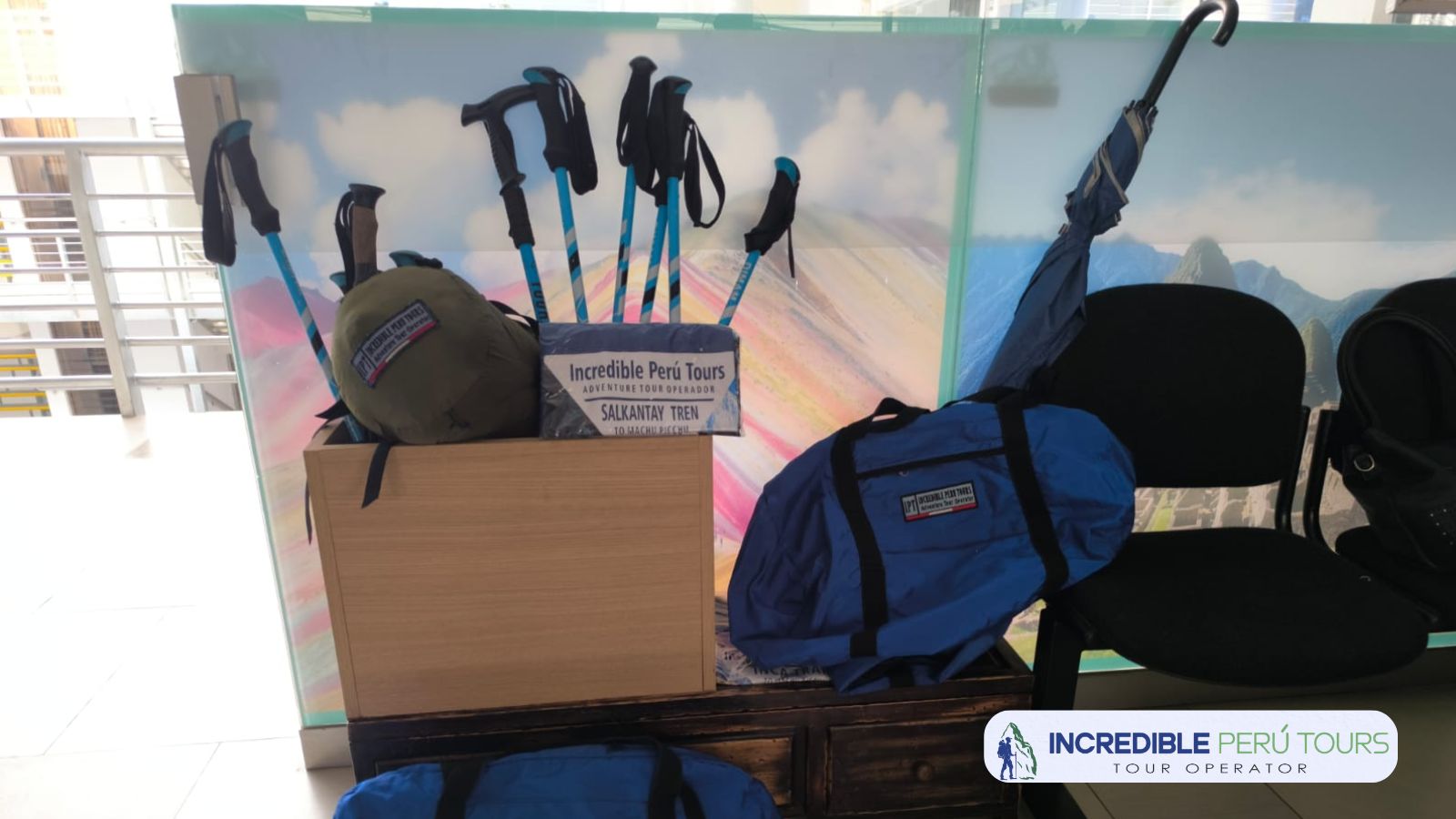
It is a soft canvas bag, without a frame or wheels, provided by the agency during the pre-departure briefing, usually the afternoon before.
The design is not accidental. A soft bag adapts to the load assembled by the porter, can be tied securely, and distributes weight across the back. A hard suitcase or a structured backpack cannot be packed properly and is therefore not allowed.
You hand it over closed on the morning of departure and do not see it again until you reach camp in the afternoon.
The weight limit
The usual limit is around seven kilos per passenger, and here is the detail that surprises almost everyone: at most agencies, that weight includes the sleeping bag and sleeping pad.
A sleeping bag for below-freezing temperatures can weigh close to two kilos, and the sleeping pad adds more weight. Taking that into account, the actual space for your clothes and belongings is less than it seems, so it is best to weigh the bag at your hotel the night before.
Confirm two things with your agency before packing the bag: what its exact limit is and whether the sleeping bag is included or carried separately.
Weigh-in at the entrance checkpoint
Before passing through the route access checkpoint, loads are weighed. The goal is to ensure that no porter exceeds the maximum weight allowed by regulations, which includes both group equipment and the personal belongings of the person carrying it.
If the total exceeds the permitted limit, items must be redistributed or left behind right there, while the group waits. That is why agencies emphasize the personal limit so much: your excess becomes a collective problem at the entrance.
It is also a good sign when choosing an agency. A company that respects and explains these checks is likely to take equal care with the rest of the service.
What to pack in the duffle and what to carry with you
| In the duffle bag | In your daypack |
|---|---|
| Sleeping bag and sleeping pad, if included in the weight limit | Water for the day |
| Sleepwear and changes of clothes for the four days | Waterproof jacket and warm layer |
| Thermal clothing for camp nights | Snacks for the day |
| Toiletries and quick-drying towel | Sunscreen, hat, and sunglasses |
| Sandals for camp | Insect repellent |
| Chargers and spare battery | Passport and Inca Trail permit |
| Spare flashlight | Personal medication and toilet paper |
The rule that keeps everything organized: whatever you may need between breakfast and arriving at camp goes with you, because the duffle travels ahead with the porters.
The last day: no porters
This is the point almost no one anticipates. On the final morning, the porters leave the last camp at dawn to go down and catch their train, which has a fixed schedule and does not wait for them.
That means you complete the final stretch to Machu Picchu carrying your own belongings. Keep this in mind when packing the duffle too: every extra kilo you put in on the first day will be noticeable on that final morning, after three days of hiking and stairways.
When you reach the citadel, there is a luggage storage service at the entrance, as large bags are not allowed inside.
If you need more space
Most agencies allow you to hire an additional porter or extra kilos for an additional fee. Arrange it before leaving Cusco: once on the route, there is no way to add staff to the group.
Another common option is to hire a personal porter to carry your daypack as well on the toughest sections. This is common among those who hike slowly or want to climb the highest pass without weight.
What to leave in Cusco
Everything that does not fit in the duffle or daypack stays in the city: your large suitcase, clothes for the rest of your trip, and anything you will not use during the four days.
Hotels store their guests’ luggage free of charge during the trek, and many agencies offer the same service at their office. Lock your suitcase and ask for a receipt.
Also keep in mind that if you return by train from Aguas Calientes, the allowed carry-on luggage per passenger is limited and is usually around five kilos.
How to protect what is inside
- Put your clothes in waterproof bags before packing them. It can rain without warning in the cloud forest sections.
- Do not include fragile items: the bag is tied to the load and placed on the ground many times a day.
- Never send money, documents, or valuables in the duffle.
- Identify it with a colored ribbon: all the bags in the group look alike.
- Close liquid containers tightly or carry them in a separate bag.
The porters and the weight they carry
The personal limit is not an agency whim: it exists so that each porter carries an amount they can manage for four days over stairways and high mountain passes.
Respecting your weight allowance is the most direct way to care for the person walking ahead of you. When choosing an agency, ask how many porters it assigns per group, what equipment it provides for them, and how it organizes their meals and rest. Companies that pay attention to those details usually take care of everything else as well.
Frequently asked questions
Does the sleeping bag count toward the allowed kilos?
At most agencies, yes, along with the sleeping pad. Confirm this before packing the duffle, as it significantly changes the space available for your clothes.
Can I access my duffle during the day?
No. The porters leave after the group, walk faster, and arrive at camp first. You will only get your bag back in the afternoon, so carry everything you need for the day in your daypack.
What happens if my bag weighs too much?
You will need to remove items before departure or pay for the excess, depending on the agency’s policy. Weight is checked at the entrance checkpoint, so there is no room for improvisation.
Can I use my own bag instead of the agency’s?
Some agencies allow it if it is soft, has no rigid structure, and stays within the weight limit. Others require you to use theirs to make packing the loads easier. Ask during the briefing.
Who carries my things on the last day?
You do. The porters head down at dawn to catch their train, so you complete the final stretch to Machu Picchu with your luggage. That is the best reason not to fill the duffle to its limit.