


You finish your visit to Machu Picchu with five days of hiking in your legs, and you still have one final journey ahead: getting back to Cusco. There is no single way to do it, and the option you choose affects how many more hours you will spend traveling, what time you arrive, and how much you enjoy your last day. Some agencies include one option, while others let you choose. Here are all the alternatives, how long each one takes, and how to decide which is best for the rest of your trip.
Why your return shapes your last day
Aguas Calientes has no road access. There are only two ways to leave the town: by train or by walking about ten kilometers to Hidroeléctrica, where the road begins.
That decision determines your entire day. If you return by train, you can stay at Machu Picchu for as long as your entry time allows and enjoy lunch at a relaxed pace. If you return via Hidroeléctrica, your visit must end early to catch the afternoon vehicle. That is why it is worth knowing your option before choosing your entry time to the sanctuary.
By train to Ollantaytambo, then on to Cusco
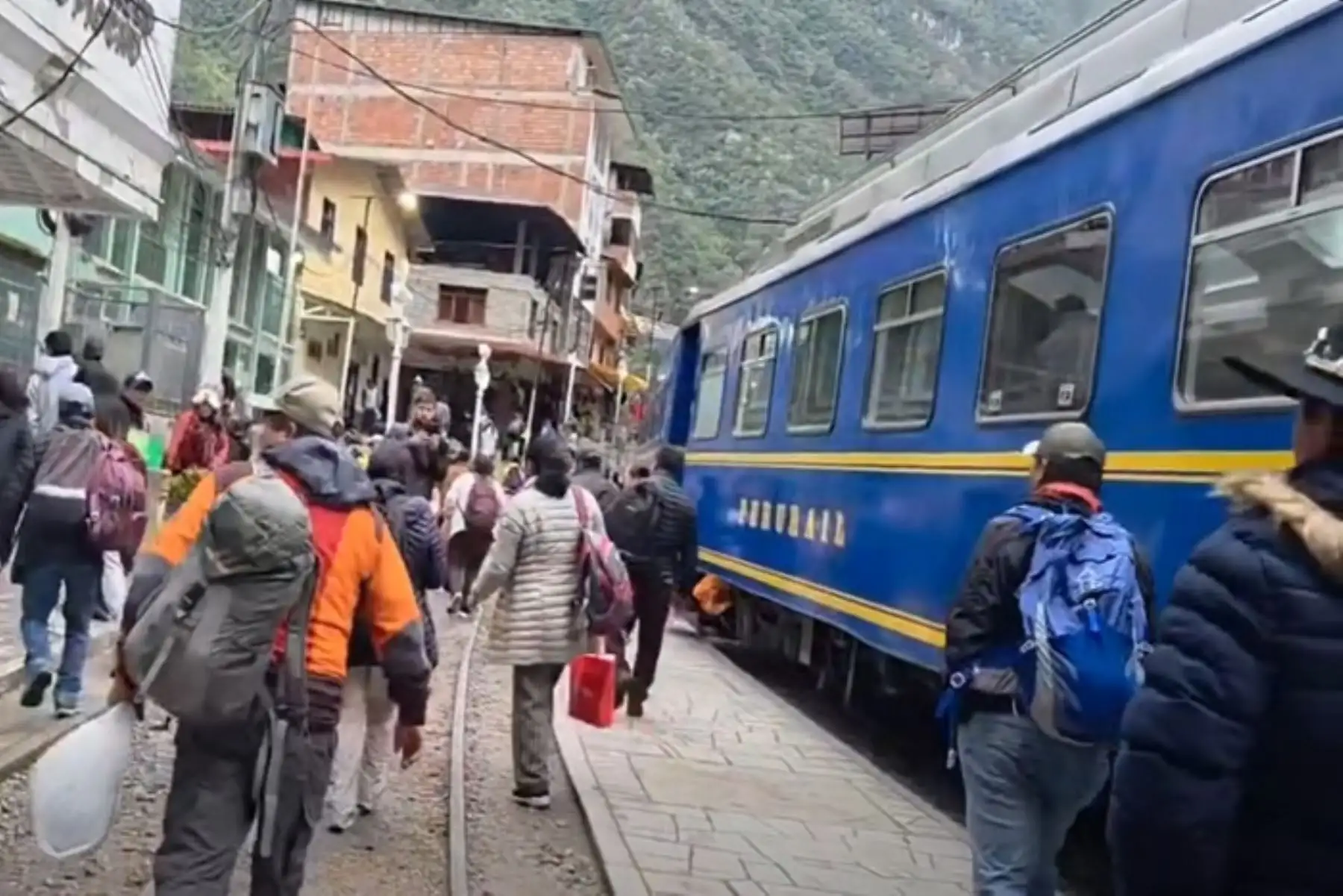
This is the most comfortable and fastest option. You take the train in Aguas Calientes, travel through the Urubamba Valley in around an hour and a half, and get off in Ollantaytambo, where a vehicle will be waiting for the final two-hour journey to Cusco.
Service types
Train operators PeruRail and Inca Rail offer several categories. The basic service is the one most commonly used by Salkantay tours. Higher categories include panoramic windows, better onboard service, or, in the case of luxury trains, a complete dining experience. If your tour includes the basic option, you can almost always pay the difference to upgrade, subject to availability.
Return schedules
Return trains depart from midday until nighttime. Mid-afternoon departures are the most requested because they leave time for your visit and lunch without arriving in Cusco too late. During high season, they sell out weeks in advance, so it is best to choose your train time at the same time as your Machu Picchu entry slot.

Train to Poroy
Some services continue to Poroy station, around twenty to thirty minutes from central Cusco. The train journey is longer, but you avoid changing to a vehicle in Ollantaytambo. This route does not operate in every season, so confirm it when booking.
Walk to Hidroeléctrica and take a vehicle to Cusco
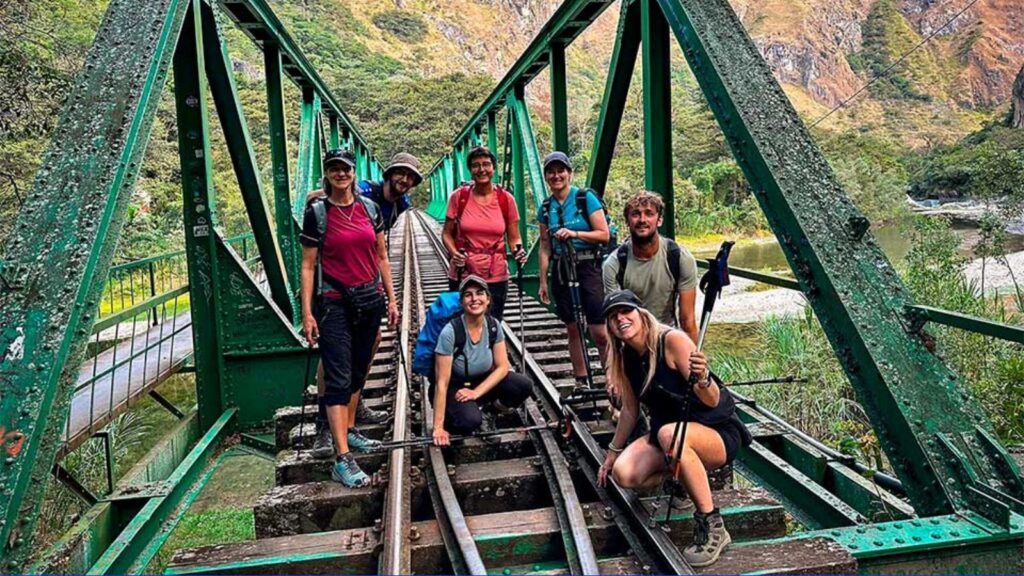
This is the budget option and the one included in many lower-priced tours. After your visit, you go down to Aguas Calientes, collect your luggage, and walk along the railway tracks to Hidroeléctrica, which takes two and a half to three hours. From there, a vehicle takes you to Cusco via the Santa Teresa road and Málaga Pass, taking another six or seven hours.
The departure time you cannot miss
Return vehicles usually leave Hidroeléctrica in mid-afternoon. If you arrive late, the vehicle will not wait. This means you need an early entry time for Machu Picchu and should leave the sanctuary around midday to allow enough time for the walk.
What to expect from the road journey
The road crosses several climate zones and climbs to Málaga Pass, above 4 000 m s. n. m. It has many curves, narrow stretches, and during the rainy season, a risk of landslides that can delay the journey. Bring warm clothing for the high-altitude section, motion sickness medicine if you need it, and food for the road. You will usually arrive in Cusco very late at night.
Stay one more night in Aguas Calientes
An alternative that few travelers consider is not returning on the same day. You spend the night in Aguas Calientes after your visit and take the train the following morning.
You gain unhurried time at Machu Picchu, can visit the town’s hot springs, and get some rest before traveling. It also gives you the option of entering the sanctuary again the next day if you buy a second entry ticket. The cost is one hotel night and, in many cases, a cheaper train than the afternoon departures.

Stay in the Sacred Valley
If your trip continues through the region, you do not need to return to Cusco that night. You can get off the train in Ollantaytambo and stay there or in Urubamba, at a lower altitude and in a quieter setting than the city.
The following day, you can explore the Sacred Valley on your way to Cusco or continue to another destination. Arrange with the agency for the transfer from the station to take you to your hotel in the valley instead of Cusco.
How to choose the best option
| Option | Time from Aguas Calientes | Comfort | Relative cost | Key requirement |
|---|---|---|---|---|
| Train to Ollantaytambo and vehicle | 3 h 30 min to 4 h | High | Medium | Book the train in advance |
| Train to Poroy | Around 4 h | High | Medium to high | Only available in some seasons |
| Walk to Hidroeléctrica and vehicle | 9 to 10 h | Low | Low | Leave Machu Picchu early |
| Night in Aguas Calientes | The following day | Very high | High | Have a free day in your itinerary |
| Night in the Sacred Valley | The following day | Very high | Medium | Continue traveling through the region |
If you have a flight the next day, prioritize the train. If you are traveling on a tight budget and still have plenty of energy, the Hidroeléctrica option works. If you can add a day, the extra night is the best way to end the trek.
Coordinate your return with your flight
Do not schedule a flight from Cusco for the same night you return. With any of the options, you will arrive at night, and a train delay or a landslide on the road could make you miss your flight.
The sensible option is to fly from the following day onward, preferably from mid-morning. If your flight leaves very early, consider returning by train rather than via Hidroeléctrica, so you do not arrive in Cusco after midnight.
If you return by train with your trek bag, check the carry-on luggage limit explained in luggage transport on the Salkantay Trek.
What to do if you miss the train or vehicle
Notify your guide or agency immediately. If you miss the train, the ticket is normally non-refundable, but the agency may help you find a seat on a later departure by purchasing a new ticket.
If you miss the vehicle in Hidroeléctrica, your options are to wait for another service if available, take a shared taxi to Santa Teresa, or return to Aguas Calientes and travel back by train the next day. In every case, the sooner you notify someone, the more alternatives you will have.
Frequently asked questions
How long does the full return journey to Cusco take?
By train and vehicle, it takes between three and a half and four hours from Aguas Calientes. Walking to Hidroeléctrica and then traveling by road takes between nine and ten hours in total.
Can I return by train even if my tour includes the return via Hidroeléctrica?
In many cases, yes, by paying the difference. Request it when booking, because afternoon trains sell out during high season and the change depends on availability.
Is the return by vehicle via Santa Teresa safe?
It is a route traveled daily, but it requires a driver experienced on mountain roads. If you are traveling during the rainy season or are concerned about the journey, the train is the more relaxed alternative.
Can I return to Cusco on the same day as my visit to Machu Picchu?
Yes, with either of the two main options. By train, you arrive in Cusco at night; via Hidroeléctrica, very late at night. Only an extra night in Aguas Calientes or the Sacred Valley means returning the following day.
Where will the transfer drop me off when I arrive in Cusco?
It depends on the agency. Some drop you off at your hotel, while others use a central point, such as San Francisco Plaza or near Plaza de Armas. Confirm this in advance, especially if you arrive at night with luggage.