


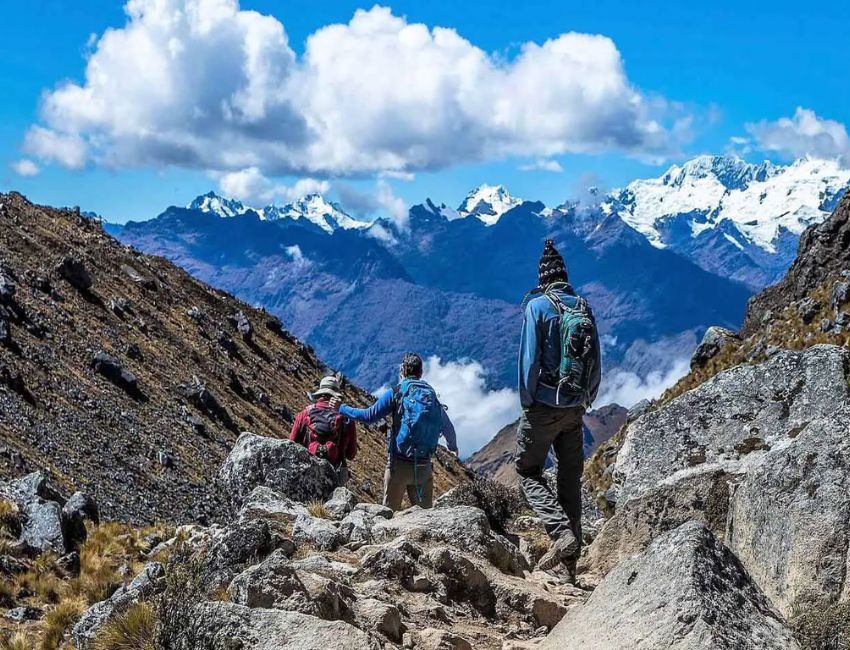
The Salkantay Trek crosses vastly different landscapes in just a few days: from cold high mountains above 4,600 m s. n. m. to the mild, humid cloud forest. That is why choosing the right clothing is one of the decisions that most affects your comfort during the hike. Here, we explain what to bring, how to dress in layers, and which garments cannot be missing from your backpack.
Why dress in layers
On the Salkantay, temperatures change several times a day. Mornings are cold, the sun warms up at midday, and temperatures drop considerably again at night. Carrying just one very warm garment will not work: what does work is the layering system, which lets you add or remove clothing depending on the moment.

The three-layer system is as follows:
- First layer (base): in contact with your skin, it keeps your body dry. Thermal or technical clothing that wicks away sweat.
- Second layer (insulation): retains heat. A fleece or insulated jacket.
- Third layer (protection): protects you from wind and rain. A waterproof jacket.
With these three layers, you can adapt to almost any moment of the trek, from the cold at sunrise to the afternoon heat.
The first layer: thermal base layer
This is the layer you wear directly against your body. Its purpose is to keep you dry, as sweat moisture is what makes you feel coldest at high altitude.
- Long- and short-sleeved technical shirts (avoid cotton, as it retains moisture).
- Thermal underwear for cold nights and early mornings.
- Lightweight, quick-drying trekking pants.
The second layer: insulation
This is the layer that keeps you warm, especially in high-altitude areas and at night.
- A fleece or thermal mid-layer for daytime.
- An insulated or down jacket for cold nights, especially in Soraypampa and at the Salkantay Pass.
The third layer: wind and rain protection
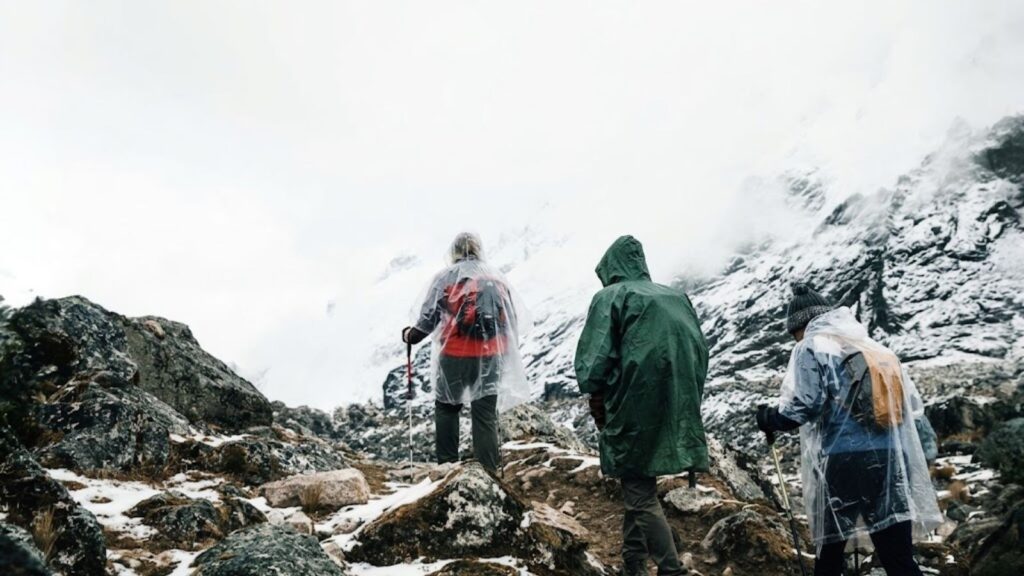
Mountain weather changes quickly, and rain can appear in any season.
- A waterproof jacket with a hood that blocks wind and water.
- A rain poncho, useful for covering both you and your backpack at the same time.
- Waterproof pants, especially recommended during the rainy season.
Clothing for cold nights
Nights in the higher part of the route are cold, especially in Soraypampa, at nearly 3,850 m s. n. m. To sleep comfortably, bring:
- Thermal clothing exclusively for sleeping (keep it dry).
- Wool socks.
- A hat for sleeping, as a lot of heat is lost through the head.
- Gloves.
Clothing accessories you should not forget
- A beanie or balaclava for the cold.
- A sun hat or cap for the midday sun.
- A scarf or neck gaiter, which keeps you warm and protects you from dust.
- Trekking socks (several pairs, to keep your feet dry).
- Gloves, important for early mornings and the Salkantay Pass.
Footwear
Although it is not “clothing,” footwear is essential and deserves attention:
- Well-broken-in trekking shoes or boots, never new ones, to prevent blisters.
- Comfortable sandals to rest your feet at the campsites.
- Proper trekking socks that reduce friction.
What clothing to bring by season
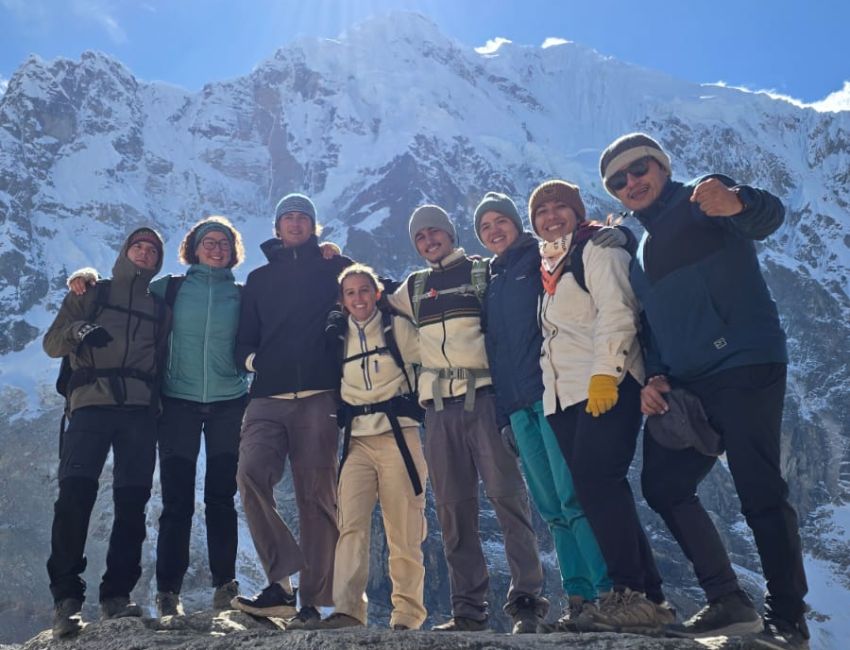
During the dry season (from April to October): days are sunny, while nights are very cold and clear. Prioritize warm clothing for the night and sun protection for the day.
During the rainy season (from November to March): in addition to warm clothing, full waterproof gear (jacket, poncho, and pants) is essential, as rain is more frequent.
Advice on quantity
Do not overpack. Many tours transport part of your luggage, and during the hike you only carry a small daypack with what you need for the day. Bring garments you can mix, match, and reuse, prioritize lightweight items, and remember that in Cusco you can buy or rent anything you are missing before you leave.
Frequently asked questions
What type of clothing is best for the Salkantay Trek?
Technical, layered clothing. Avoid cotton, as it retains moisture, and prioritize quick-drying garments and warm clothing for the nights.
Is it very cold on the Salkantay?
Yes, especially in the higher section and at night, in areas such as Soraypampa (nearly 3,850 m s. n. m.) and the Salkantay Pass (over 4,600 m s. n. m.). In the cloud forest, the climate is milder.
Do I need waterproof clothing even if I go during the dry season?
Yes. Mountain weather changes quickly, and rain can appear at any time of year, so a waterproof jacket is always recommended.
Can I buy or rent trekking clothing in Cusco?
Yes. Cusco has trekking gear shops where you can buy or rent anything you need before starting the route.
How much clothing should I bring?
Just enough, with items you can mix and match. Since part of your luggage is transported and you only carry a small daypack each day, it is best to bring lightweight, reusable garments.