


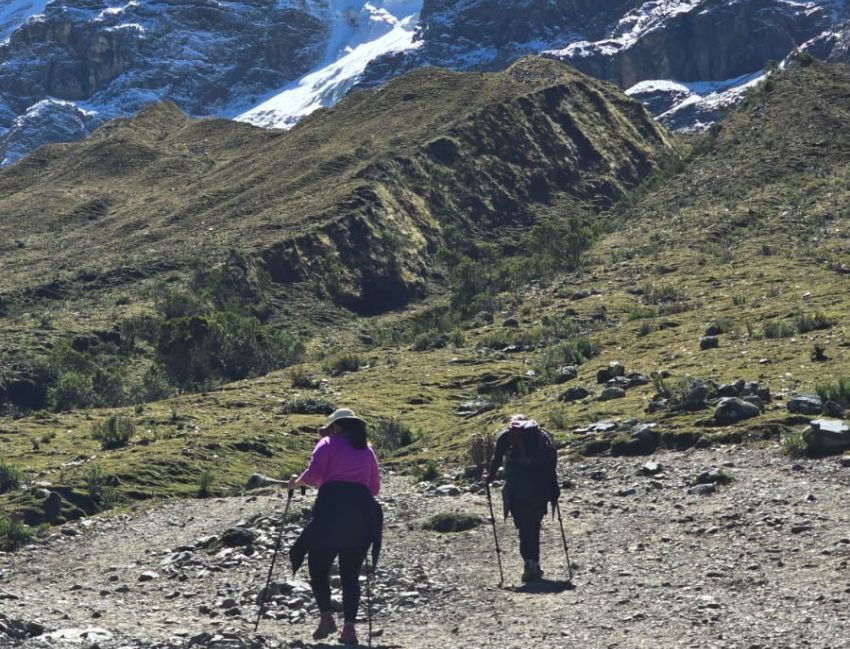
Yes. The Salkantay Trek does not require permits or an authorized operator, so anyone can hike it independently. Every season, travelers do it on their own, with their own tent or by staying at campsites run by families living along the route. The question is not whether it can be done, but whether you have the experience and willingness to handle everything an agency would normally arrange for you.
What Hiking the Salkantay Trek on Your Own Involves
Doing the trek without an agency means you are responsible for every part of the trip: getting to the trailhead, deciding where to sleep each night, carrying or finding food, navigating the route, reaching Aguas Calientes, and entering Machu Picchu on the right day. None of these tasks is impossible, but together they require planning, time, and a high tolerance for unexpected situations.
How to Get to the Trailhead
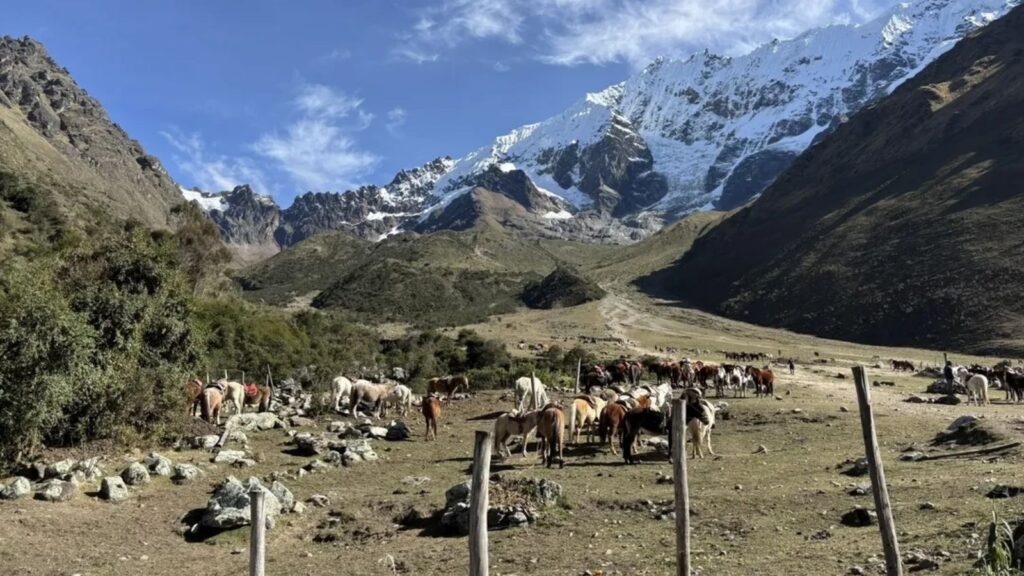
The hike usually starts in Challacancha or Soraypampa. Without an agency, the usual option is to take public transportation from Cusco to Mollepata and, from there, hire local transport up to the starting point. Schedules are not always fixed, and vehicles leave when they are full, so it is best to leave very early to avoid starting the hike in the afternoon.
Where to Sleep and What to Eat Along the Way
At several points along the route, there are campsites run by local families, where you can pitch your tent for a nightly fee and, in some cases, rent a covered space. More comfortable accommodations usually work with agency reservations, and during high season it can be difficult to find availability without booking in advance.
For food, you have two options: carry everything from Cusco or buy supplies at the small shops in the villages along the route. These shops have basic products, bottled water, and some drinks, but with limited variety and higher prices. There are fewer supply points on the high-altitude sections, so you need to carry what you need for those days. If you drink water from streams, you must treat it before drinking.
You also need to consider the weight. Carrying a tent, sleeping bag, cooking gear, and food for several days on a route that climbs to 4630 m s. n. m. is very different from hiking with a light backpack. Some people hire a muleteer and horse in Mollepata or Soraypampa to carry their load, which makes the ascent much easier.
Crossing Salkantay Pass Without a Guide
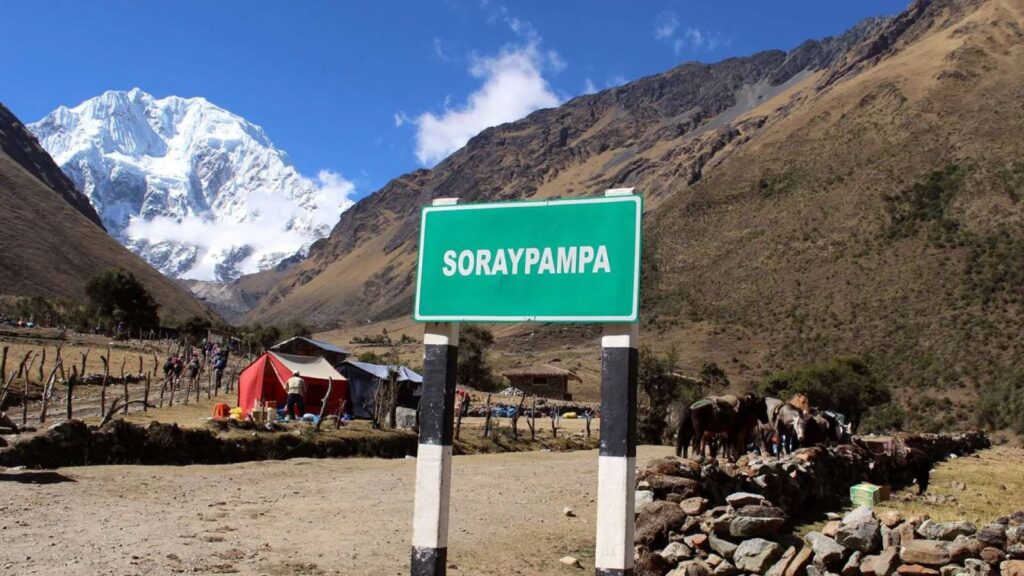
The most challenging section is crossing the pass. The trail is fairly well marked on clear days, but the weather in this area changes quickly: fog, rain, or snow can reduce visibility in a short time. Without someone who knows the terrain, it is easy to lose the trail or underestimate how far you still need to descend to reach a sheltered area.
In this part of the route, there is no cell phone signal, and the nearest medical assistance is hours away. If you have a health issue, a fall, or an injury, you depend on your own equipment and on any help you can get from other hikers or local residents.
The Final Section to Aguas Calientes
After descending toward the jungle area, the route reaches Santa Teresa and Hidroeléctrica. From there, you have two ways to get to Aguas Calientes: walk for around two to three hours alongside the railway tracks or take the train from the Hidroeléctrica station. If you travel independently, you need to coordinate transportation between the villages in the final section and, if you choose the train, buy your ticket in advance. Once in Aguas Calientes, you will need accommodation for the night before visiting the citadel.
Machu Picchu: the Part You Still Need to Arrange
Even if you do the trek on your own, entry to Machu Picchu works the same as for any visitor. You must buy a ticket with a date, circuit, and time slot, carefully calculating which day you will arrive in Aguas Calientes. If your hike is delayed by weather or fatigue, you will miss your entry time, and the ticket cannot be rescheduled.
In addition, the visit to the citadel must be done with an official guide, so you will need to hire one beforehand or at the entrance. You also need to buy the uphill and downhill bus tickets, as well as the return train ticket to Cusco.
Who It Makes Sense For and Who It Does Not
Hiking the Salkantay Trek without an agency can work if you have already completed multi-day hikes at high altitude, know how to navigate in the mountains, travel with at least one other person, bring your own gear, and have flexible dates in case something is delayed.
However, it is not the most recommended option if this is your first long hike, if you are traveling alone, if you have limited time in Cusco, or if you have not been at high altitude before. In these cases, the savings of going independently are often offset by the exhaustion, the time spent organizing every detail, and the risk of facing any unexpected situation alone.
Middle-Ground Options
It is not all black and white. Some people hike independently but hire a muleteer to carry their load, or book only their accommodations and Machu Picchu ticket in advance so they do not depend on same-day availability. Others choose an agency service that includes basic logistics while allowing them to keep their own pace. The important thing is to identify which parts of the trip you can manage on your own and which ones are best arranged before you set off.
Frequently Asked Questions
Is it legal to do the Salkantay Trek without an agency?
Yes. The route does not require permits or the company of an authorized operator.
Can I cross Salkantay Pass without a guide?
Yes, but with caution. The weather changes quickly, and fog can make navigation difficult. Do it only if you have mountain experience and are traveling with someone else.
Is there anywhere to buy food along the route?
Yes, at small shops in the villages, but they have basic products and fewer options on the high-altitude sections.
Do I need a guide to enter Machu Picchu if I did the trek alone?
Yes. The visit to the citadel is done with an official guide, even if you hiked independently.
Is it recommended to do the Salkantay Trek alone?
It is not ideal, especially if you do not have high-altitude experience. There is no signal or nearby medical assistance on several sections.