


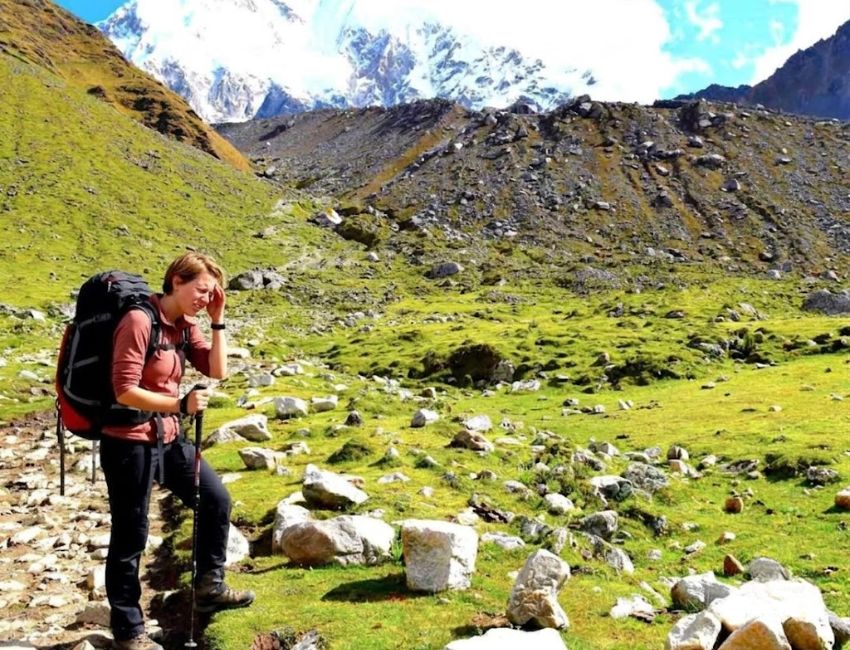
If you cannot continue the Salkantay Trek, stop in a safe place, inform the guide immediately, and clearly explain your symptoms or difficulties. Do not leave the group or try to return on your own. On a mountain route, an early, coordinated decision reduces the risk of fatigue, an injury, or an altitude-related problem getting worse.
The best alternative will depend on your location, the weather, your physical condition, and the access available along that section. The guide may arrange a rest, adjust the pace, accompany you to an accessible point, or coordinate an evacuation. Always prioritize your health over completing the planned itinerary.
What to do immediately if you cannot keep walking
Act as soon as you notice that your body is not responding as it should. Waiting until you feel very unwell can make it harder to leave the route, especially in high-altitude areas exposed to cold or far from vehicle access.
The initial assessment is not intended to force you to continue, but rather to understand what is happening and decide on the safest option. Stay calm, keep warm, and report every discomfort, even if it seems minor.
Stop in a safe place
Stop walking and move out of the way of other travelers, choosing a stable and sheltered spot whenever possible. Do not continue alone because of group pressure, fear of delaying the itinerary, or a desire to reach a specific campsite.
Avoid sitting on wet ground or exposing yourself to the wind without warm clothing, as cold can worsen discomfort and muscle stiffness. If the trail is narrow, wait for the guide’s instructions before moving to a safer area.
Inform the guide immediately
Explain what you are feeling, when it started, and how it has progressed. Specify the exact location of the pain, your level of fatigue, and whether you have nausea, dizziness, headache, or trouble breathing.
Also mention if you notice difficulty keeping your balance, altered vision, unusual weakness, or a feeling that you may faint. Providing accurate information allows the guide to assess whether you need rest, descent, additional assistance, or medical care.
Do not leave the group
Do not return to the campsite alone, take alternative paths, or move away from the guide. The Salkantay Trek has remote sections where phone signal is limited, weather changes quickly, and detours are not always marked.
Leaving the group can turn a manageable problem into an emergency. Even if you know the general direction, you should only move under the team’s coordination and with a defined exit route.
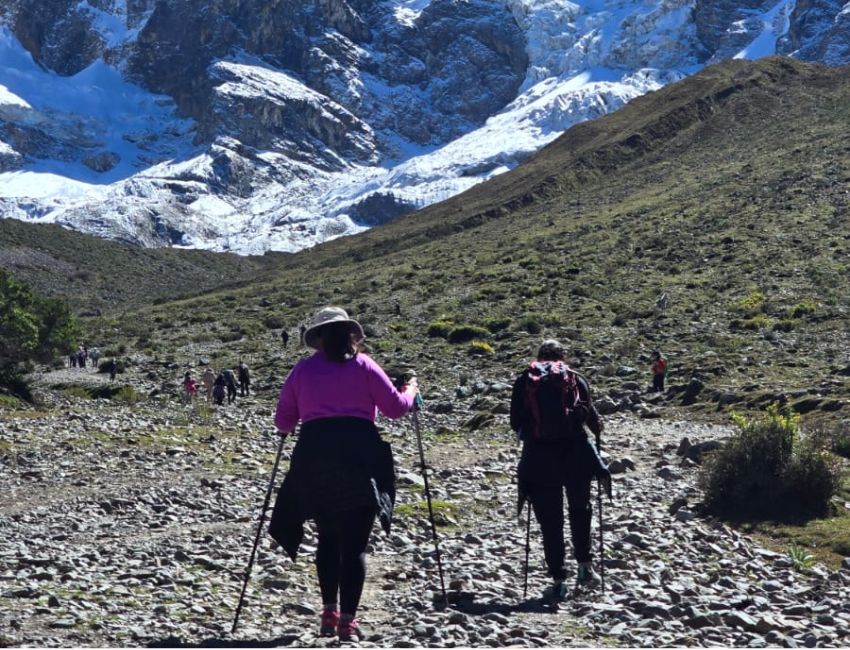
Identify why you cannot continue
The response will not be the same in every case. Mild fatigue may improve with rest and hydration, while sharp pain, altitude symptoms, or a fall may require stopping the trek.
Explaining the likely cause helps make a realistic decision. Do not try to downplay what you are feeling just to avoid changing the group’s plans.
Physical fatigue
Accumulated exertion, elevation gain, cold, lack of sleep, or insufficient preparation can cause exhaustion. The guide may stop the group to allow rest, hydration, and an assessment before deciding whether it is safe to continue.
Fatigue alone does not always mean you must stop, but it should be monitored carefully. If it worsens despite resting or affects your stability, it is not advisable to continue through a demanding section.
Altitude-related symptoms
Headache, dizziness, nausea, weakness, loss of appetite, or coordination problems may be related to altitude. They should be reported immediately, especially during ascent days.
Salkantay Pass rises above 4.600 m s. n. m., so good physical fitness does not eliminate the risk. The progression of symptoms and response to rest will guide the next decision.
Pain or injury
Intense pain, swelling, a fall, or inability to put weight on a limb require stopping the hike and requesting assistance. Straining a joint or continuing with an injury can worsen the damage and make evacuation more difficult.
Do not assume that discomfort will disappear while walking. Early assessment helps protect the affected area, reduce unnecessary movement, and arrange an exit before mobility worsens.
Anxiety or emotional exhaustion
Stress, fear of an uphill section, emotional exhaustion, or feeling unable to move forward should also be communicated to the guide without shame. These factors can affect concentration, breathing, and the ability to walk safely.
A break, close support, and an adjusted pace can help in some cases. If distress persists or prevents calm decision-making, the prudent choice is to seek an alternative way out.
What to do if the problem is fatigue
A break may be enough when fatigue is mild and improves with warm clothing, fluids, food, and rest. It should not be used to pressure a traveler to continue if their condition does not improve.
The goal is not to regain the original pace at any cost, but to confirm that you can walk steadily and without additional warning signs appearing.
Rest and regain your pace
Rest in a place protected from the cold and assess how your body responds before resuming the hike. Drink fluids in small sips and eat something if you can tolerate it.
After the break, stand up slowly and check whether you can keep your balance. If exhaustion remains intense, the guide should reconsider whether the hike can continue.
Reduce backpack weight
When services and resources allow, the operator may redistribute part of the luggage to reduce the load. This measure can relieve fatigue, but it depends on the group’s logistics and is not always available.
Do not hand over essential items without discussing it with the guide. Keep warm clothing, water, documents, authorized personal medication, and anything needed to remain comfortable during a possible wait.
Continue at a slower pace
Only resume walking if you feel stable and the guide considers that you can move forward safely. A slower pace, short breaks, and a shorter distance may be helpful when the problem was temporary exertion.
Do not try to make up for lost time by walking quickly afterward. Maintaining a steady, realistic pace reduces the risk of falling, becoming dehydrated, or reaching the next point completely exhausted.
When to stop trying
You should interrupt the route if fatigue worsens, prevents you from walking steadily, or appears together with dizziness, nausea, severe headache, shortness of breath, or disorientation.
A common mistake is insisting because there is only a short distance left. In the mountains, the remaining distance is not the only factor: elevation gain, weather, and your ability to sustain the effort also matter.
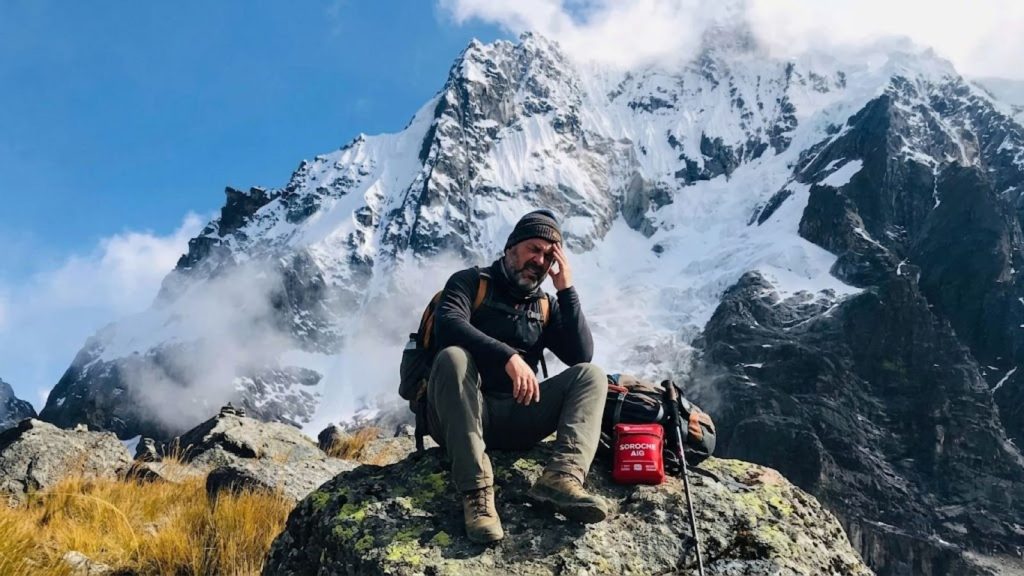
What to do if you have altitude sickness symptoms
If symptoms consistent with altitude sickness appear, do not continue ascending. The safest measure depends on the intensity of the discomfort, how it develops during rest, and the guide’s assessment.
Symptoms can progress gradually or quickly. Reporting them early makes it possible to act before the traveler’s condition requires a more complex evacuation.
- Stop ascending
- Descend if symptoms worsen
- Signs that require urgent attention
- Do not hide symptoms with medication
What to do if there is an injury
In case of an injury, avoid putting weight on or unnecessarily moving the affected area while the guide assesses the situation. The priority is to prevent further damage and determine how to request help according to your location.
An apparently minor injury can become complicated because of uneven terrain, moisture, or long distances. The decision to continue should be based on actual mobility, not just the traveler’s determination.
Pain that prevents walking
Do not force yourself to continue when there is intense pain or an inability to put weight on a leg, carry weight, or use a joint. Continuing to walk can worsen a sprain, muscle injury, or bone problem.
The guide will assess stability, swelling, and the distance to the next safe point. If you cannot walk without compensating with other parts of your body, the appropriate course is to arrange assistance.
Falls and impacts
Report any fall or impact, even if you initially think you can continue. You should do so immediately if there is dizziness, disorientation, intense pain, bleeding, headache, or difficulty moving.
After a fall, do not get up in a hurry or continue without an assessment. In particular, impacts to the head, back, neck, or knee require closer observation.
Blisters and minor discomfort
Blisters, chafing, and mild muscle pain should be treated at their first signs. Waiting until the pain is intense can turn a manageable discomfort into a reason to stop hiking.
Keep your feet dry, check that your boots fit properly, and change socks if they are wet. The guide can help with basic first-aid measures depending on the available equipment.
Assessment before continuing
Before moving on, mobility, pain, the remaining distance, terrain type, and evacuation options should be assessed. Walking a few minutes to a shelter is not the same as crossing a long, isolated uphill section.
If you decide to continue, you must be able to do so without putting the group at risk or delaying care that may be necessary. Reassessment should continue throughout the rest of the day.
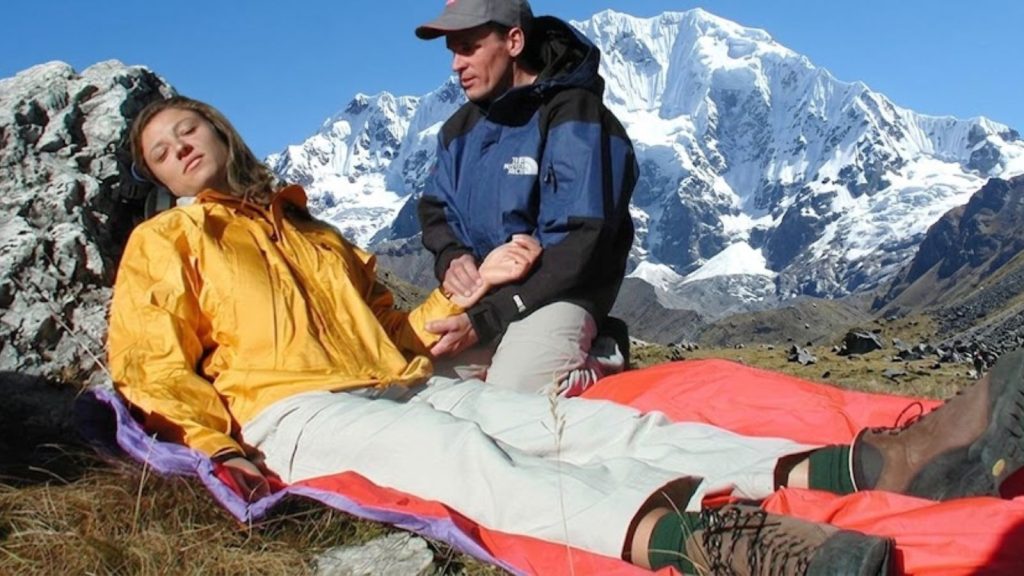
Options for leaving the Salkantay Trek
Options for leaving the Salkantay Trek depend on the section of the route, weather, road conditions, and available resources. Not all points offer immediate vehicle access or communication with the outside world.
For this reason, leaving the trek should be coordinated with the guide and operator. The fastest exit is not always the safest, especially during rain, fog, or after an injury.
Return to the previous campsite
Returning to the previous campsite may be an option when the route is safe, the traveler can move with support, and the guide considers that there is no additional risk. It should never be done independently.
The team will assess whether someone can accompany you, the trail conditions, and whether communication is available to arrange the next transfer. The previous campsite may provide shelter and better coordination options.
Continue to an accessible point
When the traveler’s condition allows it, the guide may arrange a controlled walk to a place with transport access. This alternative is only appropriate if walking will not worsen the condition.
The accessible point may be farther ahead or lower down, depending on the section of the trek. It should not be confused with an obligation to complete the entire stage.
Evacuation using local transportation
Some sections may allow the use of vehicles, pack animals, or other means of transport. Their availability is not guaranteed and may be affected by rain, schedules, damaged roads, or the group’s exact location.
The cost and coordination of these services vary depending on the situation. Before booking, ask the operator how they handle evacuation from the different days of the route.
Transfer to a medical center
A transfer to a medical center should be arranged when there is a significant injury, severe altitude symptoms, progressive deterioration, or a condition that does not improve with initial measures.
The treatment location will depend on the area and the urgency. Carrying travel insurance, medical information, and an emergency contact makes coordination easier when assistance is needed outside the trek.
Who decides whether the traveler can continue
The decision must prioritize safety. It should consider what the traveler is feeling, the guide’s assessment, and, when possible, advice from a medical professional or the insurance assistance service.
There is no single rule based on the distance covered. Two people with similar symptoms may require different decisions depending on their progression, altitude, injuries, and access to a safe exit.
Guide’s responsibility
The guide must assess the situation, keep the traveler accompanied, and coordinate any route change or evacuation. They must also inform the operator of the details needed to activate logistical support.
Their role is not only to maintain the itinerary. They must assess terrain conditions, weather, symptom progression, and the safety of the rest of the group.
Traveler’s personal decision
No one should feel obligated to finish the trek if they believe continuing puts their health at risk. Leaving a hike can be a responsible decision, not a failure.
Be honest about your condition. Hiding symptoms to avoid missing planned activities can delay descent or treatment and increase the costs of a situation that could have been resolved earlier.
When to seek medical assistance
Seek professional assistance for severe symptoms, significant injuries, progressive worsening, or doubts about the traveler’s condition. It is also advisable to contact the insurance provider if its terms require prior authorization for an evacuation.
Do not wait for a definitive diagnosis to seek guidance. Early care is especially necessary for respiratory or neurological changes, severe impacts, or inability to walk.
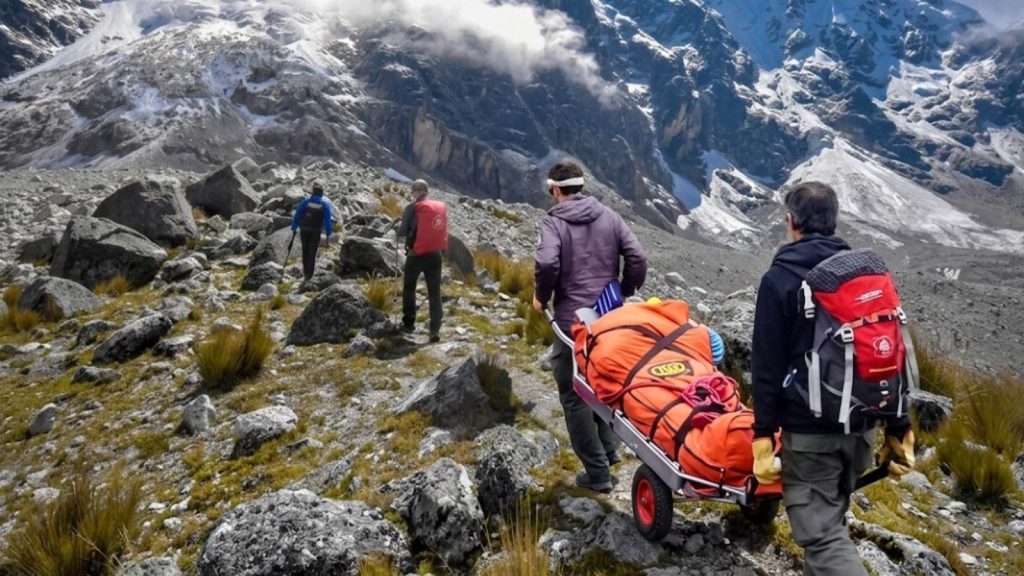
Costs of leaving the route
Leaving the hike may result in expenses not included in the program, such as additional transportation, accommodation, train changes, or medical care. The amount depends on where the route is interrupted, the season, and the resources required.
Before booking, check which services the operator covers and which costs the traveler may need to assume. Having suitable insurance can reduce the financial impact of an evacuation or itinerary change.
Services included by the operator
Before booking, ask what assistance is included if a participant cannot continue. Some companies include first aid and basic coordination, but extraordinary transfers or external services may involve an additional cost.
Request this information in writing and review the program conditions. Also ask whether the company can help reorganize later reservations when leaving the route affects the plan to reach Machu Picchu.
Transportation and accommodation expenses
An evacuation or itinerary change may require additional payments for local transportation, private vehicles, accommodation, meals, or accompaniment. Prices vary depending on the location, availability, and road conditions.
In remote areas, an immediate transfer can be more expensive than a planned one. That is why it is advisable to have an emergency fund and a policy that covers trekking activities.

Changes to tickets and return travel
Leaving the hike may affect train schedules, accommodation, transportation, and the visit to Machu Picchu. Some reservations allow changes under certain conditions, while others depend on availability or may have penalties.
If you need to reorganize logistics in Cusco, Aguas Calientes, or for your return journey, you can consult the Salkantay.tours team to review the available alternatives according to your reservations and travel dates.
Importance of travel insurance
It is advisable to purchase a policy that covers trekking at the altitude reached by the route, medical assistance, evacuation, and travel changes. Not all standard policies include mountain activities or rescues in remote areas.
Read the conditions before purchasing. A useful policy should clearly state what altitude it covers, which activities are included, and how assistance is activated in an emergency.
Check the covered altitude
Some policies set limits for activities carried out at high altitude. Verify that the limit includes Salkantay Pass, which rises above 4.600 m s. n. m.
Do not assume that coverage for a trip to Peru automatically includes high-altitude trekking. Review exclusions related to mountaineering, guided hikes, and pre-existing medical conditions.
Confirm evacuation coverage
Confirm whether the policy covers ground evacuation, medical expenses, transfer to a healthcare facility, and necessary changes due to an emergency. Also check whether you are required to contact the assistance center first.
Keep the emergency number and know the procedure before starting the route. In an urgent situation, the guide can help coordinate, but coverage depends on your contract.
Keep documents and contacts handy
Carry the policy, assistance phone numbers, identification document, and relevant medical information in an accessible place protected from moisture. Also keep a digital copy available without relying exclusively on phone signal.
Inform a trusted person about your itinerary and share the insurance details. This can make arrangements easier if you need to stay in a clinic or change your return plans.
What to ask the operator before booking
Knowing the company’s procedure before starting the hike allows you to make a more informed decision. Ask about real scenarios: severe fatigue, altitude symptoms, injuries, and early departure.
The answers should be specific to the route you are booking. A responsible operator should explain what can be done in each section and which services depend on local providers.
- Emergency protocol
- First-aid equipment
- Alternatives for leaving the route
- Support during evacuation
How to reduce the risk of leaving the trek
It is not possible to eliminate all risks of a high-altitude hike, but proper preparation reduces the likelihood of leaving the Salkantay Trek because of exhaustion or foreseeable problems.
Training, acclimatization, appropriate equipment, and a realistic itinerary choice have a greater impact than trying to compensate for lack of preparation during the route.
- Train before your trip
- Acclimatize in Cusco
- Choose a suitable itinerary
- Disclose medical conditions
Frequently asked questions
These answers clarify the most common questions about leaving or interrupting the Salkantay Trek. Each case should be assessed according to the traveler’s condition and their location on the route.
Can I leave the Salkantay Trek halfway through?
Yes, it is possible to leave the Salkantay Trek halfway through, but the exit must be coordinated with the guide. Options vary depending on the section, weather, road conditions, and transport access.
Can I return to the campsite alone?
It is not advisable to leave the group or walk alone on a remote route. You must inform the guide and only move with a safe plan, accompaniment, and a coordinated exit route.
What happens if I cannot walk because of fatigue?
The guide will assess whether a break, hydration, a lighter load, or a slower pace are appropriate. If fatigue does not improve, affects your balance, or appears with other symptoms, an alternative exit must be arranged.
What if I have altitude sickness symptoms?
You should stop ascending and report the symptoms immediately. If they worsen during rest, do not improve, or serious signs appear, it will be necessary to descend and seek medical assistance.
Will I miss my visit to Machu Picchu?
It will depend on where you leave the route, transport availability, and whether reservations can be modified. It may be possible to reorganize part of the itinerary, although there may be costs or schedule changes.
Does insurance cover evacuation?
It depends on the policy, its altitude limits, covered activities, and exclusions. Before traveling, make sure it includes high-altitude trekking, medical assistance, and evacuation in remote areas.