


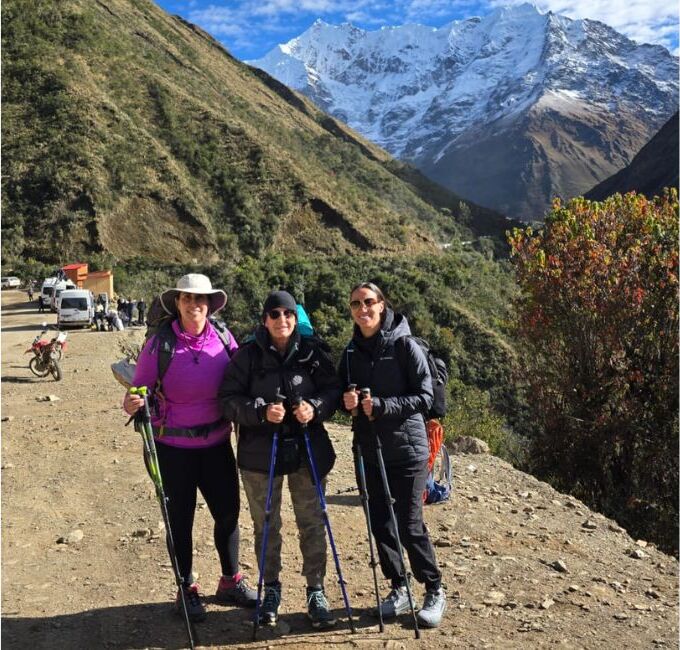
The difficulty of the Salkantay Trek ranges from moderate to high due to the altitude, long hiking hours, and changing terrain. It can be done by beginners who arrive well prepared physically, acclimatize before starting, and maintain a suitable pace. The level of challenge also varies depending on the length of the program and the included services, such as luggage transport, camping nights, or support along the route.
It is not an easy hike, especially for those who are not used to walking for several hours at a time. However, choosing a well-paced itinerary, training in advance, and respecting the group’s pace make it possible to tackle the route more safely and comfortably.
What is the difficulty level of the Salkantay Trek?
The Salkantay Trek is considered a moderate to challenging hike. It does not require technical mountaineering skills, but it does demand physical endurance to walk for several days, tackle long ascents, and adapt to high-altitude conditions.
The effort varies depending on each traveler’s fitness level, acclimatization, the pace maintained by the group, and the chosen duration. An active person may find the days more manageable, while someone without prior training may experience greater fatigue, especially during the first few days.
Physical difficulty
The route combines several hours of daily hiking with ascents, descents, and sections of uneven terrain. Your legs work continuously, especially on climbs and long descents, which can cause fatigue in the knees and muscles if you do not have a prior fitness base.
Good endurance helps you complete each day more comfortably. You do not need to be an athlete, but it is helpful to be able to walk for several hours without tiring too quickly. The physical difficulty also decreases when you manage your energy well, take reasonable breaks, and maintain a steady pace instead of starting too fast.
Difficulty due to altitude
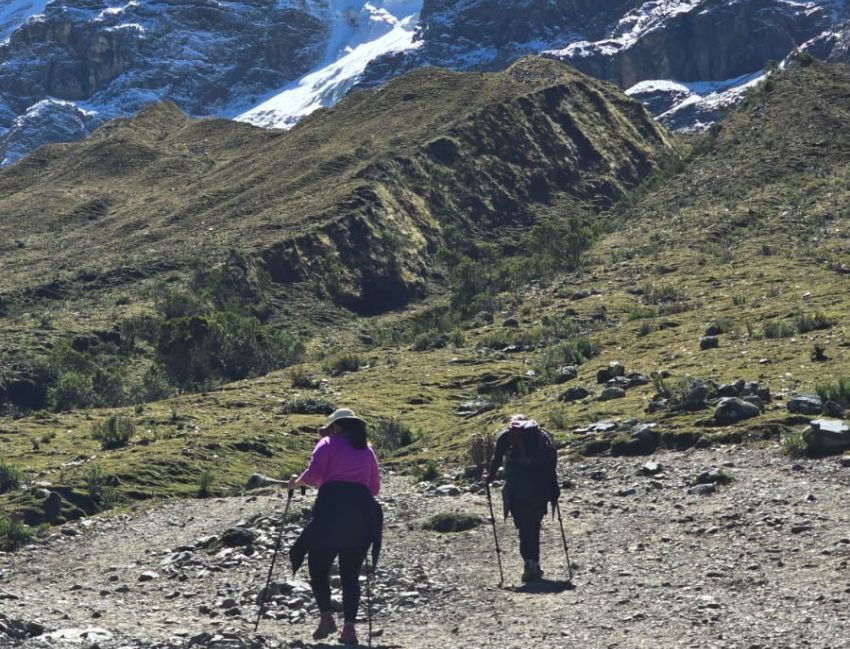
Some sections of the Salkantay Trek take place at high altitude, and this factor can increase the feeling of fatigue even for people who train regularly. At higher elevations, the body needs time to adapt to the lower level of available oxygen.
Proper acclimatization before starting the hike helps the body respond better during ascents. Spending a few days beforehand in Cusco or another high-altitude area allows you to begin the trek better adapted and reduces the need to push your pace during the first days.
Difficulty based on duration
The duration of the program has a direct effect on the difficulty of the Salkantay Trek. Shorter itineraries usually pack in more distance and effort per day, so the days can be more intense and leave less time for recovery.
Longer programs spread out the hikes more effectively and allow you to move at a more gradual pace. This option is often convenient for those who want more time to rest, adapt to the altitude, and enjoy the changing landscapes without feeling that every day is a race against the clock.
What makes the Salkantay Trek difficult?
The challenge of this route does not depend on a single section. It comes from the combination of altitude, elevation gain, hiking duration, changing weather, and surface type. One day may start with low temperatures and end with intense sun or rain, requiring you to adjust your pace and clothing.
The logistics of the program you book also matter. Carrying a light backpack and having support for your main luggage can make a considerable difference compared with hiking for several days with a heavy load on your back.
The ascent to Salkantay Pass
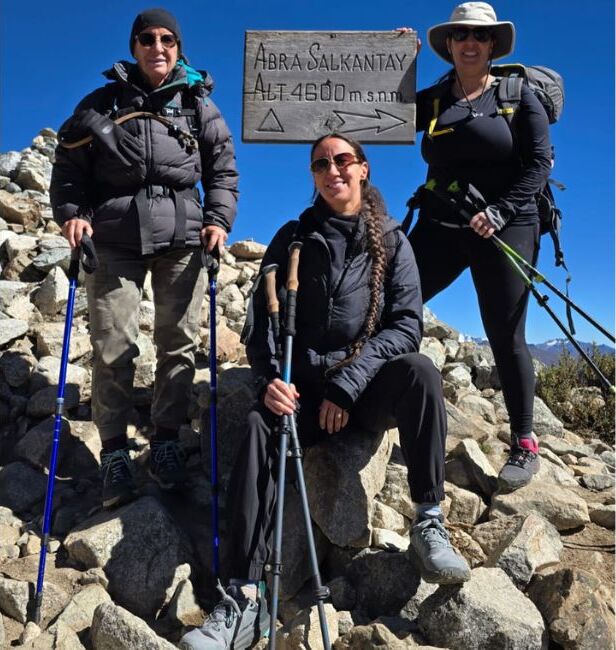
The ascent to Salkantay Pass is usually one of the most demanding moments of the entire route. The incline combines with the altitude and low temperatures, so it is common for progress to be slower than in other sections of the trek.
In this section, it is best to avoid comparing yourself with other travelers’ pace. Walking slowly, maintaining steady breathing, and stopping when necessary will help you manage the ascent better. Arriving acclimatized and having trained on routes with elevation changes makes this section more manageable.
Hiking hours
Some days can involve several hours on the trail. The difficulty depends not only on the total time, but also on the distance, cumulative elevation gain, trail conditions, and each person’s individual pace.
Those with little experience on long hikes often feel the strain more at the end of the day. For this reason, it is best to start at a sustainable pace in the morning and avoid using too much energy in the first few kilometers. Short breaks, hydration, and proper nutrition help maintain performance throughout the day.
Weather and terrain
During the hike, you may encounter cold, rain, mud, intense sun, and rapid temperature changes. These variations mean that the effort is not always the same, since walking in wet clothing, through mud, or under strong sun can increase fatigue.
The terrain also changes throughout the route. There are rocky sections, steep slopes, uneven trails, and paths where you need to watch every step. Wearing footwear with good support and adapting to the conditions of each day helps reduce discomfort and stumbles.
Can a beginner do it?
A beginner can complete the Salkantay Trek with prior preparation, good physical condition, and acclimatization. You do not need technical mountain experience, but you should understand that it is a demanding route requiring consistent effort over several days.
The most common mistake is thinking that enthusiasm alone is enough to complete the route. Attitude helps, but basic physical preparation and a realistic choice of itinerary are key to enjoying the hike without turning every day into overexertion.
Recommended fitness level
It is recommended to have the endurance to walk for several hours and handle continuous ascents and descents. A person who exercises regularly, walks often, or does cardiovascular workouts usually arrives with a better foundation for the route.
You do not need to be an athlete, but you should arrive prepared. If you currently lead a very sedentary lifestyle, it is best to begin training in advance and increase the intensity gradually. This allows your body to adapt better to long hiking days and elevation changes.
Required previous experience
Technical mountain experience is not always required to do the Salkantay Trek. The route does not require rope handling or specialized knowledge, although it does require attention when walking on uneven surfaces and slopes.
Having completed long hikes before can help you understand how your body responds after several hours of effort. It also allows you to test your footwear, backpack, and clothing before the trip, avoiding the need to break in gear during the trek.
Importance of acclimatization
Spending a few days in Cusco or another high-altitude area before the trek can help your body adapt gradually. Arriving and starting the hike on the same day usually makes the high sections more difficult to handle.
During those days beforehand, it is best to plan relaxed activities and avoid demanding too much from your body. Each person adapts at a different pace, so it is advisable to listen to how you feel and keep your plans flexible before starting the route.
How should you prepare for the Salkantay Trek?
Preparing in advance noticeably reduces the feeling of difficulty during the Salkantay Trek. The goal is not to train as if for a competition, but to arrive with enough endurance to hike for several consecutive days, handle ascents and descents, and recover between days.
In addition to training, it is helpful to review the itinerary you booked and know which services are included. Knowing whether your main luggage will be transported, how much weight you need to carry during the day, and what type of accommodation will be used allows you to choose the right gear and avoid unnecessary loads.
Pre-trek training
During the weeks before your trip, it is advisable to do endurance exercises, long walks, and cardiovascular activity. Walking, light jogging, cycling, or endurance routines can help improve your ability to sustain effort for several hours.
Preparation works best when it increases gradually. Starting with short sessions and adding distance or intensity each week helps you arrive with greater confidence. It is also advisable to include hikes similar in duration to those you expect to do during the trek.
Hikes with elevation gain
Training on routes with ascents and descents prepares your legs better for the most demanding sections of the Salkantay Trek. Slopes work different muscles than urban walking and help you get used to the effort of moving uphill.
Descents also deserve attention. Many people focus only on climbs, but going downhill for long periods can cause fatigue in the knees and legs. Practicing both types of elevation change improves balance, stability, and overall endurance for the route.
Proper gear
It is best to bring already broken-in trekking footwear, layered clothing, rain protection, and a comfortable backpack for the items you need during the day. Layered clothing makes it easier to adapt to temperature changes without carrying excessive clothing.
The gear you need may vary depending on the season and the services included in the tour. Before traveling, it is useful to confirm the permitted luggage weight, which items are provided by the operator, and which items each passenger must bring. Breaking in boots or a backpack on the route is usually a mistake that can cause unnecessary discomfort.
So, is the Salkantay Trek difficult?
The Salkantay Trek is a demanding hike, but it is achievable for many people with preparation, acclimatization, and a suitable itinerary. The difficulty increases in high-altitude sections, during long ascents, and on days with changing weather, although these factors can be managed better with realistic planning.
The experience can be more difficult for those who are not used to walking for several hours or arrive without physical preparation. Choosing a longer version, training before the trip, and not rushing your pace allow you to tackle the route in better conditions and with greater comfort.
Frequently asked questions
These answers help compare the demands of the different programs and determine whether the route matches your current level of preparation.
Which day is the most difficult?
Usually, the day heading to Salkantay Pass is one of the most demanding because of the altitude, the ascent, and the weather conditions. The pace is generally slower in this section, so it is best to conserve energy from the beginning of the trek.
Is it more difficult in 4 or 5 days?
The four-day version usually concentrates more effort into each day, with more demanding distances and hiking times. The five-day version spreads out the hikes more effectively and offers more room to rest and adapt to the route’s pace.
Can you do it without experience?
Yes, it can be done without technical mountain experience, but having good physical condition, prior training, and acclimatization is recommended. Having completed long hikes before the trip helps you arrive with a more realistic expectation of the effort required.