


Six in the evening in La Playa, with the heat easing and the group sitting outside after the hike. That is the time and place where most Salkantay Trek travelers get bitten. Not in the mountains, where the cold keeps insects at bay, but in the afternoons along the high jungle section, just when you relax, take off your jacket, and sit down to chat. Bites from those days can be bothersome for a week, and nearly all of them can be avoided with two or three simple choices.
Where They Appear and Where They Don’t
First, the good news: there are practically no mosquitoes in the higher part of the trek. Soraypampa, Humantay Lake, and the mountain pass are too high and cold for them. You can relax during the first two days.
Things change as you descend toward the cloud forest. From Chaullay and Collpapampa onward—and especially in La Playa, Lucmabamba, Santa Teresa, and along the path beside the railway to Aguas Calientes—the humidity and heat create the perfect environment for them.
The most active spots are near water: riverbanks, areas with dense vegetation, and the Cocalmayo hot springs at sunset.
The Critical Hours
At dawn and dusk. These two periods have the highest activity, and they happen to coincide with the times when you are still: having breakfast or relaxing at camp.
During the midday hike, with strong sunshine and constant movement, bites are much less frequent. That is why you should apply protection before sitting down, not before hiking.
What Insects You Will Encounter
There are two types that bother travelers in different ways.
Zancudos are classic mosquitoes: you hear them coming, and the bite swells quickly but goes away in a short time.
The others are tiny insects locally known as manta blanca. They are much smaller, almost invisible, silent, and they mainly bite ankles, legs, and the back of the neck. Their bites leave a red spot that itches intensely for several days, sometimes more than a week. They are responsible for most complaints along this section.
Insect Repellent: Which One and How to Use It
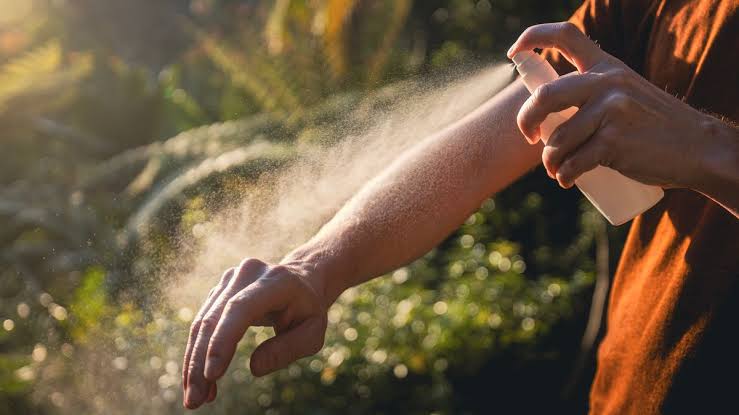
Not all repellents work equally well. Look for repellents with proven active ingredients, such as medium- or high-concentration DEET, picaridin, or IR3535. Homemade products and aromatic oils last very little in a humid environment.
- Apply it to all exposed skin, including your ankles, the tops of your feet, the back of your neck, and behind your ears.
- If you use sunscreen, apply it first and then put repellent on top.
- Reapply after sweating heavily, swimming in the river, or leaving the hot springs.
- Apply it again before sitting down for dinner, even if you already used it in the morning.
- There are specific permethrin treatments for clothing, which are applied to fabric and never directly to the skin.
Buy it in Cusco before you leave. You can find it in towns along the route, but there is less variety and prices are higher.
Clothing: Your Best Barrier
Repellent helps, but covering up is what truly works. When you arrive at camp in the jungle area, change into a long-sleeved shirt, long pants, and socks.
Ankles are the most commonly bitten area because they are exposed when you sit in sandals after hiking. If you plan to wear sandals at camp, wear socks or apply plenty of repellent there.
Light-colored clothing made from fabric that is not too thin helps. Small insects can bite through very thin, tight-fitting fabrics.
In the Tent and at Your Accommodation
Before going to sleep, check that your tent’s mosquito net has no holes and always keep it closed, even if you step out for a moment.
At accommodations in the jungle area, check whether there is a mosquito net over the bed and whether the windows have screens. If not, keep the lights off when opening the door at night: light attracts insects inside.
What to Do About Bites
The most important thing is not to scratch, no matter how uncomfortable it is. Scratching breaks the skin and opens the door to infection, which is a much bigger problem while on the route than the bite itself.
Wash the area with soap and water, apply something cold if you have it, and use a soothing cream or an antihistamine if you carry one in your first-aid kit. If a bite becomes hot, swells significantly, or oozes, let your guide know.
What to include for these situations is covered in first-aid kit for the Salkantay Trek.
What Doesn’t Work
Repellent wristbands protect, at most, just a few centimeters around your wrist. Ultrasonic phone apps have no supporting evidence. And citronella candles do little outdoors, where the air disperses the smoke.
Rely on repellent, clothing, and mosquito nets. That is what people who live in the area use.
Frequently Asked Questions
Are there mosquitoes throughout the Salkantay Trek?
No. There are practically none in the higher section during the first two days. They appear as you descend into the cloud forest, from Collpapampa to Aguas Calientes.
Do I need any vaccines or medication because of mosquitoes?
Consult your doctor before your trip, taking your full itinerary into account. If you are also visiting lowland jungle areas in addition to the trek, recommendations may differ from those for Salkantay.
What time of year are there more mosquitoes?
During the rainy season, from November to March, when humidity and standing water increase. They are also present during the dry season, but in lower numbers.
Do manta blanca bites last a long time?
Yes, they usually itch for several days and sometimes for more than a week. Not scratching them is the best way to help them heal without leaving a mark.
Can I buy insect repellent during the trek?
Yes, in towns in the jungle area and at some shops along the route. Still, it is best to leave Cusco with your own, because the first bites may happen before you find a place to buy it.