


On the Salkantay Trek, what changes most from one agency to another is not the route, but where you sleep. They all cross the mountain pass and all end at Machu Picchu, but a night in a tent at nearly 3 900 m a.s.l. is nothing like a night in a dome with a transparent roof or in a lodge with a hot shower. The campsite determines how well you rest, how cold you get, and, to a large extent, how much you pay. If you are booking for 2027, comparing agencies by their campsite is the fastest way to find the one that suits your trip.
How the trek changes depending on where you sleep
The first night is the one that makes the biggest difference. Almost all agencies stay overnight in the Soraypampa area, at the foot of the snow-capped mountain, at around 3 900 m a.s.l. There, temperatures can drop below freezing between June and August, and it is the night before the most demanding day: the climb to the mountain pass, which rises above 4 600 m a.s.l.
Sleeping well that night is not a luxury. You reach the pass with more energy, less headache, and a better mood for the hours of descent that follow.
From the second night onward, the route descends toward the high jungle and the weather becomes mild. There, the type of accommodation matters less for rest and more for comfort: private bathroom, hot shower, bed, or sleeping pad.
Traditional tents
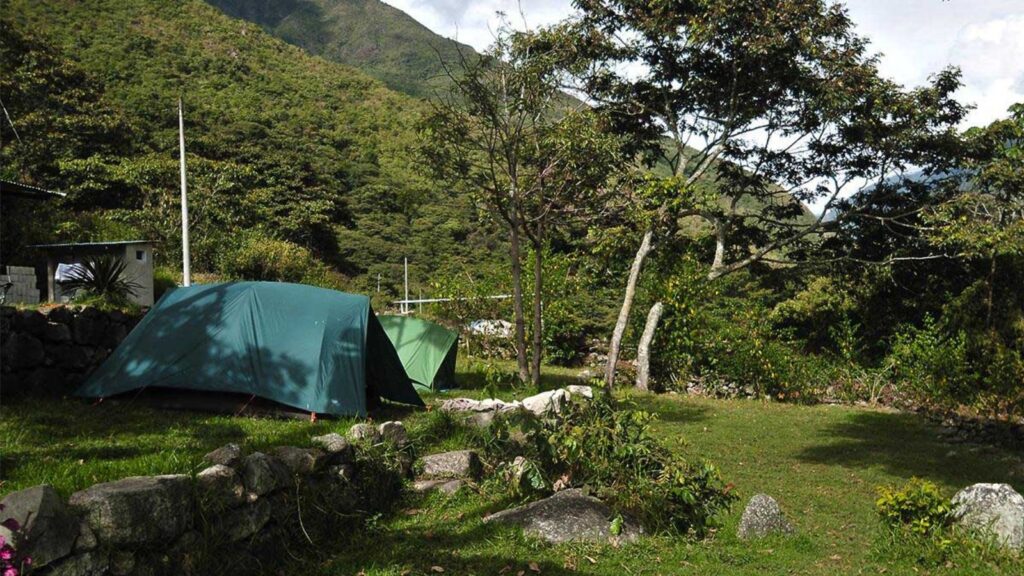
This is the classic and most affordable option. The agency sets up the tents at campsites with basic facilities, and the support team assembles them before you arrive.
Who it is for
For travelers who have camped in the mountains before, are traveling on a tight budget, or want the most traditional trekking experience.
What to consider
Quality varies greatly between agencies. A four-season tent with a thick sleeping pad and a sleeping bag suitable for below-freezing temperatures is a reasonable experience. A lightweight summer tent with a thin mat, in July and at 3 900 m a.s.l., guarantees a bad night.
Bathrooms are usually shared and basic, and there is not always a shower at the first campsites.
Domes with mountain views
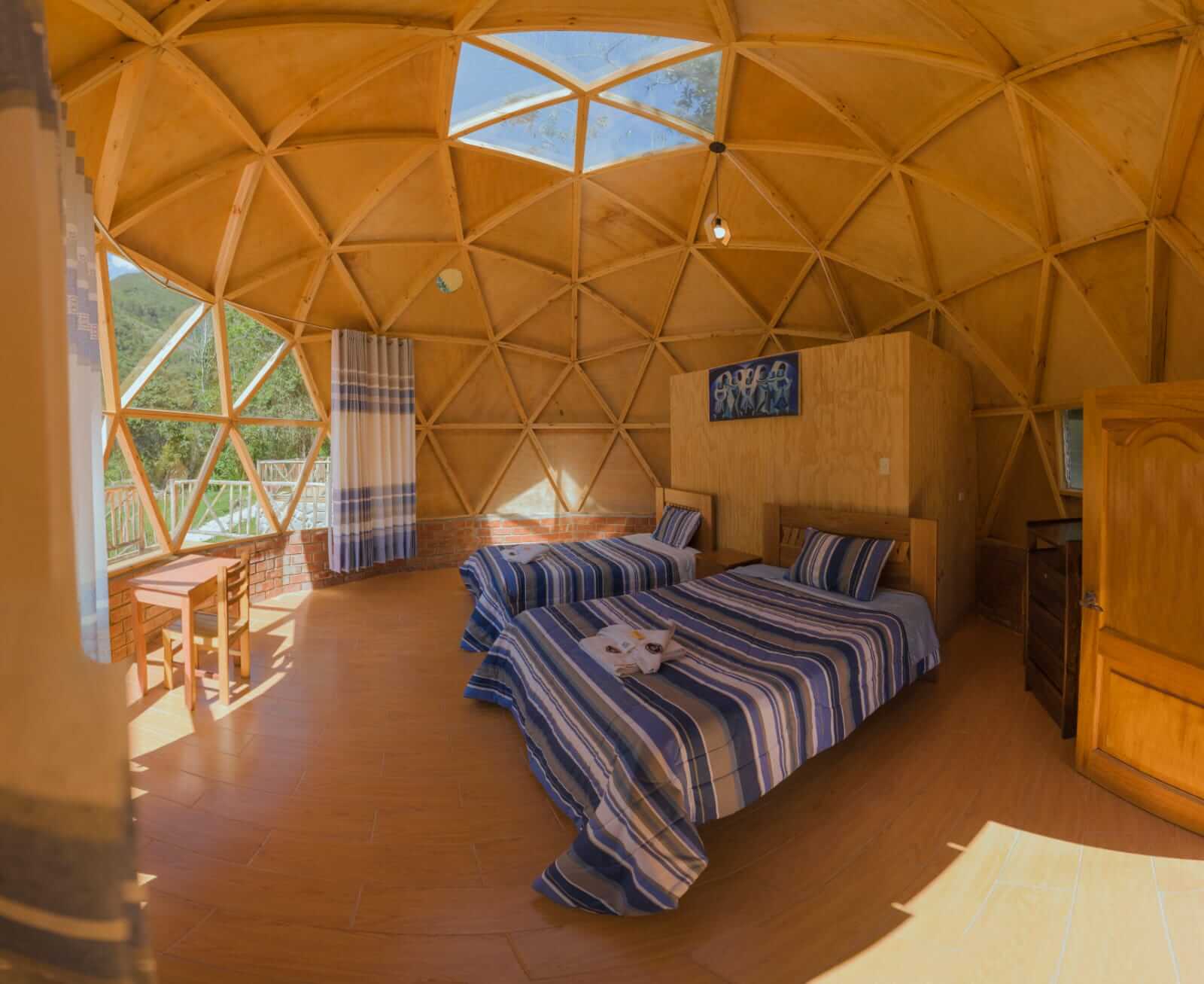
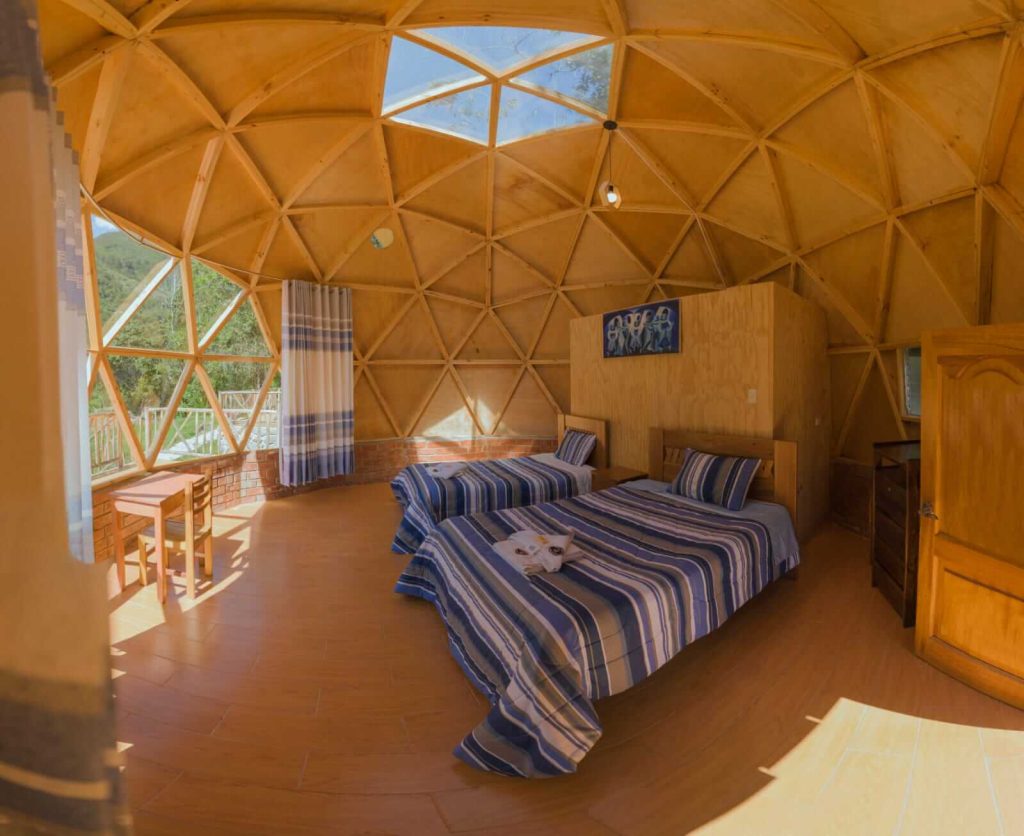
Domes are fixed structures set up in the Soraypampa area, with a bed, blankets, and a partially or fully transparent roof facing the Salkantay snow-capped mountain. They have become the most sought-after option on the route.
Who it is for
For travelers who want to sleep warm on the coldest night of the trek without paying for a full lodge. They are also ideal for couples and for anyone who has never camped before.
What to consider
Not all domes are the same. Some have private bathrooms and heating, while others are simply a bed under a transparent cover with a shared bathroom outside. In addition, many agencies use domes only on the first night and return to tents on the following nights.
With clear skies, between May and September, the nighttime view of the stars justifies much of the price. During the rainy season, the transparent roof loses some of its appeal, although it remains just as warm.
Lodges with private rooms
Lodges are permanent buildings with private rooms, en-suite bathrooms, hot showers, and dining areas. Some include an outdoor jacuzzi or fireplace.
Who it is for
For travelers who want to do the Salkantay Trek with hotel-like comforts, for older travelers, celebration trips, or anyone who simply does not want to camp.
What to consider
Lodges follow their own route variation and do not always match the classic overnight stops. The price is several times higher than a tent trek, and availability is limited, so they sell out months in advance during high season.
Soraypampa, Chaullay, and Lucmabamba: where each campsite is located
Although each agency adjusts its itinerary, most use these three overnight stops on the five-day version.
| Night | Area | Approximate altitude | Nighttime weather | Typical accommodation |
| 1 | Soraypampa | 3 900 m a.s.l. | Cold, below freezing in the dry season | Tents or domes |
| 2 | Chaullay or Collpapampa | 2 900 m a.s.l. | Cool | Tents or cabins |
| 3 | Lucmabamba or La Playa | 2 100 m a.s.l. | Mild | Tents or cabins on coffee farms |
| 4 | Aguas Calientes | 2 040 m a.s.l. | Mild and humid | Hotel |
In the four-day version, one of the intermediate nights is removed or shortened, resulting in longer hiking days. Ask the agency exactly where you will sleep each night, as this determines how many hours you will walk the next day.
What to ask the agency about its campsite
Before booking, ask for specific answers to these questions. If an agency cannot provide them in writing, it is best to keep looking.
- What type of accommodation do they use on each night, not just the first one?
- Is the campsite owned by the agency or shared with other operators?
- Is the bathroom private or shared, and is there a hot shower?
- What temperatures can the included or rental sleeping bags handle?
- Is there electricity to charge your phone?
- Can they send me recent photos of the campsite for each night?
Having their own campsite is a good sign. The agency controls cleanliness, maintenance, and location, and does not depend on what is available when the group arrives.
Prices by campsite type in 2027
These ranges are estimates for the five-day shared group version, including admission to Machu Picchu and the return train. Final 2027 rates depend on each agency and adjustments to ticket prices.
| Campsite type | Range per person | Recommended advance booking in high season |
| Tents | 550 to 800 USD | 1 to 2 months |
| Domes on the first night | 800 to 1 200 USD | 2 to 3 months |
| Lodges for the entire route | 2 000 USD and up | 4 to 6 months |
To compare what is behind each price beyond accommodation, review how to choose a reliable agency for the Salkantay Trek.
Frequently asked questions
What is the coldest night on the Salkantay Trek?
The first night, in the Soraypampa area, at around 3 900 m a.s.l. Between June and August, temperatures can drop below freezing. This is the night when it is most worthwhile to invest in good accommodation.
Is it worth paying more to sleep in domes?
If you have never camped at high altitude or are traveling during the dry season, yes. You sleep warm on the night before crossing the mountain pass, and with clear skies you have direct views of the snow-capped mountain and the stars.
Can I combine domes and tents on the same trek?
Yes, and it is the most common option. Many agencies offer a dome on the first night and tents on the following nights, once the route has descended into milder areas. It is the combination with the best balance between cost and rest.
Are there showers at the campsites?
It depends on the campsite and the night. Domes and lodges usually have hot showers. At tent campsites, showers are more common from the second night onward, once you are in the milder zone.
How far in advance do domes sell out for 2027?
For June, July, and August, it is best to book two or three months in advance. Domes have few units at each campsite and are the first option to fill up during high season.