


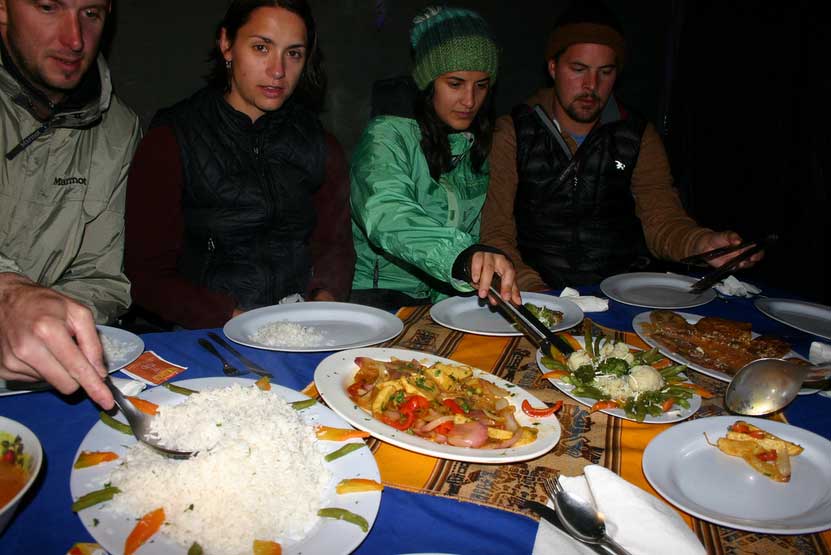
While the group sleeps, the cook is already awake. At four thirty in the morning, they fire up the stoves in a separate tent, boil water for tea and to fill the day’s bottles, and prepare breakfast for ten or fifteen people at nearly 3 900 m s. n. m. Everything they will cook over five days arrived on muleback. That logistics explains why trek food is more abundant and varied than most people expect, and why there are things that simply cannot be served on the route.
How food works during the trek
On an agency tour, all meals from the first lunch to the final breakfast are prepared by a cook who travels with the group. They are served in a dining tent with a table and benches, or in the campsite dining room when there is one.
The daily routine has four moments: an early breakfast, lunch midway through the day, afternoon tea upon arriving at camp, and dinner. It is more food than you might imagine, and you will need it: on a day of high-altitude hiking, your body burns far more than usual.
Breakfast
It is served between five and six in the morning, before breaking camp. It usually includes bread, butter and jam, eggs in some form, pancakes, hot oatmeal or quinoa, fruit, and hot drinks such as coffee, coca tea, or chamomile tea.
Eat more than your body may ask for at that hour. Several demanding hours pass between breakfast and lunch, and at altitude your appetite drops just when you need energy the most.
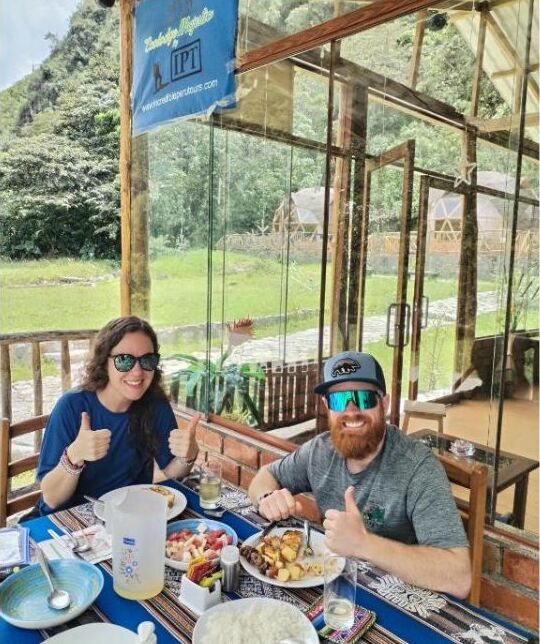
Lunch on the trail
There are two formats depending on the day. On most days, the team goes ahead and sets up the dining area at a midway point, where a hot lunch awaits you: soup, a main dish with rice or potatoes, vegetables, and an herbal tea.
On long days or sections without room to set up a dining area, you will receive a packed lunch to eat wherever you are. Ask your guide the night before which format will apply the following day.
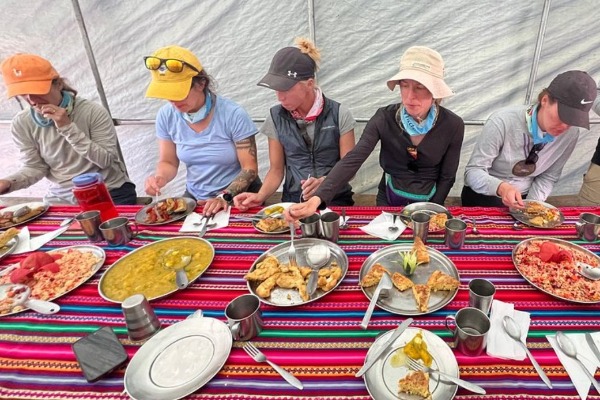
Afternoon tea
It is the trek’s most beloved tradition. Upon arriving at camp, around five, the cook serves hot drinks with toasted corn, cookies, popcorn, or something freshly fried.
Beyond the food, it is when the group sits together after hours of walking in single file. You arrive cold and stay to chat.
Dinner
It is served between seven and eight, in two or three courses. It begins with a hot soup, almost always made with quinoa, vegetables, or semolina, which is more appreciated in the highlands than any other dish.
The main course is usually a Peruvian dish adapted for the trail: lomo saltado, chicken stew, pasta, arroz chaufa, or trout in the area where it is available. It ends with an herbal tea or a simple dessert.
For dishes you will find outside the cook’s menu, in the villages along the route, see typical food on the Salkantay route.
What to eat before crossing the pass
The pass day is the most demanding of the trek, and what you eat in the hours beforehand greatly affects how you handle it.
Dinner the night before
Prioritize carbohydrates: soup, rice, potatoes, pasta. Avoid fried foods, very large portions, and alcohol. At 3 900 m s. n. m. digestion becomes slower, and a heavy dinner can ruin your sleep just before the day that requires the most energy.
Breakfast on pass day
Hearty but easy to digest. Oatmeal or quinoa, bread, some fruit, and a hot drink work better than a fat-heavy breakfast. If your stomach does not cooperate at that hour, eat at least the carbohydrates and save fruit or bread for the trail.
During the ascent
Eat small amounts often, about every hour, without waiting until you feel hungry. A couple of bites of something energy-rich at each break will keep your pace much better than a long stop halfway up. We explain how much of each item to bring in water and snacks on the Salkantay Trek.
Appetite at altitude
Losing your appetite during the first few days is normal and does not mean you are sick. The problem is that not eating becomes a lack of energy, which does worsen fatigue and headaches.
The strategy that works is to eat small portions more often, prioritize hot and liquid foods, and avoid forcing yourself to eat very fatty dishes. If you have gone two days without being able to eat almost anything, tell your guide.
Food safety on the route
A digestive illness in the middle of the trek is one of the most uncomfortable problems you can experience, because there is no way to rest comfortably or find bathrooms nearby while hiking. These guidelines greatly reduce the risk:
- Drink only boiled, bottled, or treated water, including when brushing your teeth.
- Wash or sanitize your hands before every meal. Carry gel in your backpack.
- Choose hot, freshly served dishes over raw salads.
- Fruit is best when it has a peel that you can remove yourself.
- Do not keep prepared food in your backpack from one day to the next.
- If you eat outside the tour menu, choose places with plenty of customers. We explain this in restaurants on the Salkantay Trek.
If something still makes you sick, tell your guide, hydrate with rehydration salts, and eat light foods until you recover.
The final day, at Machu Picchu
On the final morning, you will have breakfast at your hotel in Aguas Calientes, not at camp. There are no food vendors inside the sanctuary, so enter after a good breakfast and with a small snack in your backpack.
Lunch is in Aguas Calientes before the return journey, and on most tours it is at your own expense.

Frequently asked questions
How many meals are included on the Salkantay Trek?
Usually, meals are included from the first lunch through the final breakfast, with afternoon tea each day. Breakfast on the first day and lunch on the last day are usually not included.
Is the food enough, or should I bring more?
Portions are usually generous, and no one goes hungry at mealtimes. What is worth adding is your own snacks for the stretches between meals, especially on pass day.
Are there options for special diets?
Yes, as long as you let the agency know when booking, because food is purchased before departure. We cover this in special diets on the Salkantay Trek.
Can you eat meat during the trek?
Yes. The cook brings refrigerated meat for the first few days and plans the menu to use the most perishable items first. That is why meat dishes usually appear at the beginning of the route.
Can I ask them to save food for me if I arrive late at camp?
Yes. If you hike at a slow pace, let your guide know in the morning. The team will save your hot meal and, if necessary, someone will stay with you on the trail.