


It is six thirty in the morning in Mollepata, it is cold, and a deep bowl of chicken broth appears on the table: clear broth, a piece of chicken, noodles, potato, and chopped mint on top. For most travelers, it is their first taste of the cuisine they will encounter over the following days. From highland broth to granadilla split in half at a farm in La Playa, the route crosses two distinct culinary worlds. Here is what is worth trying in each one.
Soups and broths: the foundation of Andean food
In the highlands, almost no meal begins without soup. It is not a light starter: it is a hearty dish designed for the cold and physical work.
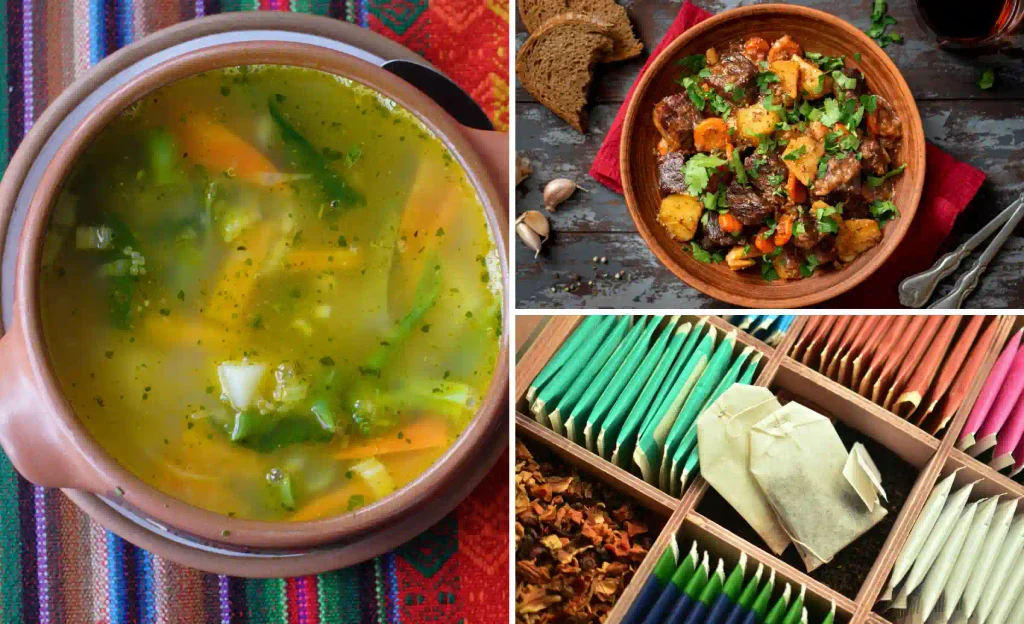
Chicken broth is the most common breakfast in Mollepata. Quinoa soup, thick and packed with vegetables, appears at camp dinners. You will also find semolina, noodle, or vegetable soup, and in some places chairo, made with chuño, the freeze-dried potato of the highlands.
After a day at 4 000 m s. n. m., that hot soup is exactly what you need, even when the altitude has taken away your appetite.
Highland dishes you will find along the route
In Mollepata restaurants and on the cook’s menu, you will find several Peruvian classics adapted to the ingredients available in the area.
Lomo saltado, made with stir-fried beef, onion, and tomato, served with potatoes and rice, is the dish people order most. Fried trout is available where there are nearby fish farms. In the everyday meals of local families, native potatoes, mote, corn, and chuño are staples that accompany almost everything.
If you stop at a roadside stall, try choclo con queso: large-kernel, warm Andean corn served with a piece of fresh cheese on the side. It is the region’s most typical mid-morning snack.
Andean snacks for the trail
Canchita, toasted and salted corn, is the usual accompaniment to afternoon tea at campsites. Toasted fava beans serve the same purpose: light, salty, and easy to carry in your pocket.
On the descent into the jungle, you will start seeing chifles, fried green plantain chips, the savory snack of this area.
Traditional drinks
Coca tea is the infusion you will see most often in the high-altitude section, served at any time of day. Muña, an aromatic Andean herb similar to mint, is also used for tea, and many people prefer it for its flavor.
Among cold drinks, chicha morada is made by boiling purple corn with cinnamon, cloves, and fruit, and it is sweet and refreshing. Chicha de jora, on the other hand, is a fermented corn drink traditional in the highlands, consumed mainly in villages.
If you have the chance, also try emoliente, a hot herbal drink sold before dawn on the streets of Cusco before departure.
Cuisine of the jungle foothills
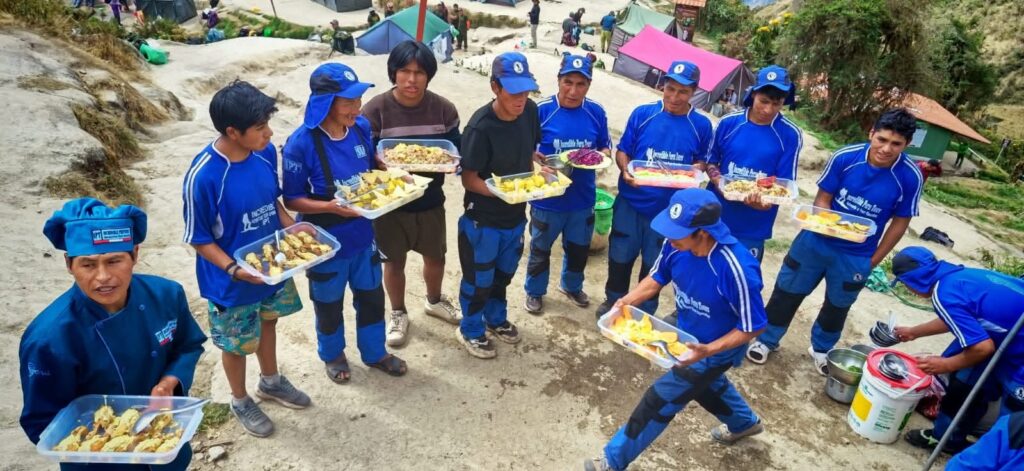
From the descent toward Chaullay and La Playa onward, the pantry changes. Chuño and native potatoes disappear, replaced by cassava, plantain, and warm-climate crops.
Boiled or fried cassava replaces potatoes as a side dish. Plantain is eaten fried, green, or ripe, and in some places it is served with pork or cecina, the salted and dried meat typical of the country’s warm regions.
Freshly squeezed fruit juices are, for many travelers, the highlight of this section. After three days of hot food in the mountains, a cold glass of passion fruit juice is remembered more than any dish.
Fruits of the jungle foothills
The area between La Playa, Lucmabamba, and Santa Teresa is agricultural, and much of what is sold beside the trail was harvested that same day or the day before.
| Fruit | How it is eaten | Where to find it |
|---|---|---|
| Granadilla | Split open and eat the pulp with a spoon | Throughout the entire high jungle section |
| Passion fruit | Mostly as juice | La Playa and Santa Teresa |
| Plantain | Fresh, fried, or as chifles | Throughout the warm section |
| Avocado | With salt, at breakfast or lunch | Valley farms |
| Papaya | Fresh or as juice | La Playa and Santa Teresa |
| Citrus fruits | Fresh or squeezed | Depending on the season |
| Mango | Fresh, during the warm season | Lower valley area |
Buying fruit from families along the trail is inexpensive and keeps money in the local area. Peel it yourself before eating it, and wash it only with treated or bottled water.
Coffee, cacao, and honey
The same valley produces coffee, cacao, and bee honey, sold at farms and small stores along the final section. Lucmabamba coffee, roasted by the farming families themselves, is the area’s star product and is worth a visit of its own, detailed in the Salkantay coffee route.
What to try at the end, in Aguas Calientes
On the final day, once in Aguas Calientes, the options expand greatly. Here you can end the trek with a well-prepared Peruvian dish: trout ceviche, ají de gallina, or cuy if you want to try the most traditional dish of the Andean region.
Interestingly, the town is also famous among travelers for its wood-fired pizzerias, which have fed people coming down from the mountains for decades. Where to eat at each point is covered in restaurants on the Salkantay Trek.
Frequently asked questions
Will I try traditional food if I book an all-inclusive tour?
Yes. The cook prepares Peruvian dishes adapted to the route, including Andean soups and traditional main courses. What is served each day is covered in food on the Salkantay Trek.
Is it safe to eat fruit bought along the trail?
Yes, if you peel it yourself and do not wash it with untreated water. Fruits with thick skins, such as granadilla or plantain, are the safest.
What is chuño?
It is potato dehydrated through a traditional process that takes advantage of nighttime frosts and daytime sun. It keeps for years and is used in highland soups and stews.
Can I try cuy during the trek?
It is unlikely along the route, as it is not part of the usual campsite menu. You will find it more easily in Cusco, the Sacred Valley, or at a restaurant in Aguas Calientes.
Does chicha de jora contain alcohol?
Yes, it is a fermented corn drink with a low alcohol content. Do not confuse it with chicha morada, which contains no alcohol. During the trek, it is best to save it for the end, because alcohol at altitude causes dehydration and affects you more strongly.