


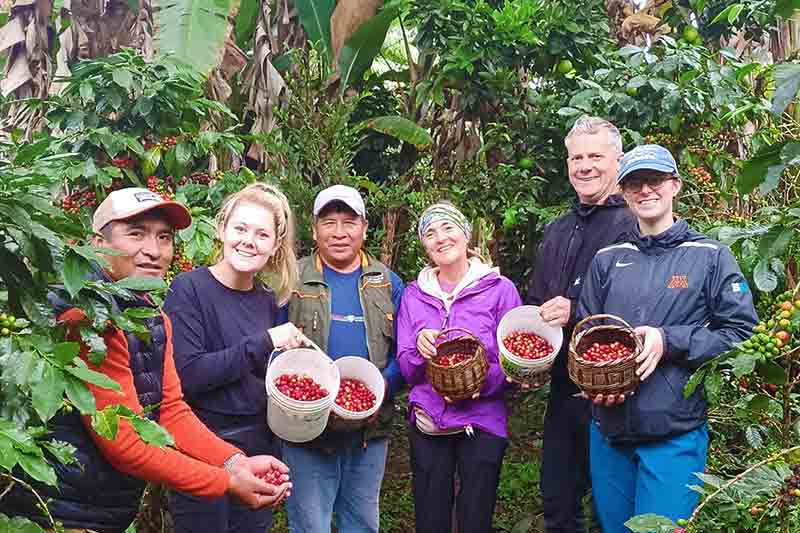
What you find along the trail depends on the month you hike. In some months, the small farms are full of citrus fruits; in others, ripe mangoes fall from the trees, and between April and September, activity centers around the coffee harvest. The one constant on the stretch between La Playa and Santa Teresa is that fruit is sold the same day it is picked, directly by the person who grew it, and for a fraction of what you would pay in Cusco. Here is what the cloud forest produces and how to make the most of it.
Why this valley produces so much
The cloud forest is the belt where the Andes descend toward the Amazon. It combines warm temperatures, constant humidity, and fertile soils, and it is high enough for crops to grow slowly and develop concentrated flavor.
The section of the Salkantay Trek that crosses this area belongs to La Convención Province, one of southern Peru’s most productive agricultural regions. What you see on the hillsides is not wild vegetation: these are family farms with shade-grown coffee, fruit trees, and gardens beside the houses.
Fruits along the trail
Granadilla
This is the trek’s signature fruit. It has an orange, brittle peel, gray pulp with crunchy seeds, and a mild, sweet flavor. You can split it open with your hands and eat it with a spoon or straight from the shell. It is also the safest fruit to buy along the trail, as its peel fully protects the pulp.
Passion fruit
A relative of granadilla, but tart. It is almost always served as juice, and in the valley’s restaurants, it is the drink hikers order most often after arriving from the heat.
Bananas
There are several types, and they are not used the same way. The small, sweet ones are eaten fresh; the larger, firmer ones are fried green as chifles or served ripe as a side dish. Homes along the trail often sell small bunches for a very low price.
Avocado
Creamy and generously sized. It is eaten with salt at breakfast or lunch, and it is one of the most nutritious additions you can make to your meals on the trail.
Papaya, citrus fruits, and mango
Papaya is sold whole or in pieces and is widely used in juices. Citrus fruits, especially oranges and mandarins, appear during the cooler months. Mangoes arrive with the heat and are among the best-selling products along the trail during their season.
When to find each product
| Product | Approximate season | How it is eaten |
|---|---|---|
| Granadilla | Almost year-round | Fresh |
| Passion fruit | Almost year-round | As juice |
| Banana | Year-round | Fresh or fried |
| Avocado | Depending on the variety, much of the year | With salt |
| Papaya | Year-round | Fresh or as juice |
| Citrus fruits | Cooler months | Fresh or as juice |
| Mango | Warmer months | Fresh |
| Coffee | Harvest between April and September | Roasted and ground |
Seasons are approximate and depend on each year’s weather. The most reliable option is to ask the family selling the produce: they will tell you what is at its best that week.
Coffee, cacao, honey, and sugarcane
Beyond fresh fruit, the valley produces items you can take home with you.
Coffee is the star product, roasted by the families of Lucmabamba themselves. We dedicated a full article to it in Lucmabamba coffee, the Salkantay coffee route.
You will also find cacao and artisanal chocolate, local bee honey, and in some places, sugarcane products, a traditional crop in these valleys. They are small, lightweight purchases that will last for the rest of your trip.
Where to buy
There are three places, each with its own advantages.
At the farms and homes along the trail, between Collpapampa and La Playa, fruit is sold individually or in small bags, freshly picked and at the lowest prices on the entire route. In village stores, you will find the same fruit along with coffee, honey, and packaged products. In Santa Teresa, the market offers the widest variety on the trek.
What you can find at each sales point is detailed in stores and kiosks along the Salkantay Trek route.
How to buy wisely
- Bring small bills and coins. No one on the trail has change for large bills.
- Ask the price before taking the fruit, naturally.
- Bargaining makes no sense here: prices are already very low, and families have minimal profit margins.
- Buy directly from the grower rather than middlemen whenever you can choose.
- Ask permission before photographing someone or their farm.
- Take the peels with you. There is no garbage collection along the route.
How to eat it safely
The rule is simple: choose fruit you can peel yourself. Granadilla, bananas, citrus fruits, and mangoes are all safe choices.
If you need to wash it, use bottled or treated water, never irrigation-channel water. Also wash your hands or use hand sanitizer before eating, especially if you have been hiking for hours.
What you can take home and what you cannot
Fresh fruit is for eating on the trail. It ripens quickly, weighs a lot, and above all, most countries prohibit bringing fresh fruit into the country in your luggage. Do not try to take it on an international flight.
What does travel well is roasted, packaged coffee, chocolate, and honey. Even so, check your country’s food import rules before buying large quantities.
And remember, you still have days of hiking ahead: every kilo you buy is one you will carry yourself to Aguas Calientes.
Frequently asked questions
Is the fruit sold along the trail safe?
Yes, if you peel it yourself and do not wash it with untreated water. Thick-skinned fruits, such as granadilla and bananas, are the safest of all.
How much does fruit cost on the route?
Very little, especially when bought directly from the farms. It is one of the smallest expenses on the trek and one of the most appreciated after two days in the highlands.
Can I take Peruvian coffee to my country?
Roasted, packaged coffee is usually allowed, but regulations vary from country to country. Check them before buying several kilos and keep the packaging with the product information.
Which fruit is best to carry in your backpack while hiking?
Granadilla and bananas are the most practical: they withstand bumps, do not make a mess, and can be eaten without utensils. Avoid overly ripe or soft fruit, which will end up crushed.
Can you visit a farm to see the crops?
Several families in Lucmabamba welcome visitors to show them the coffee-making process, and some also show their fruit trees. Ask your agency when booking or inquire once you arrive in the area.