


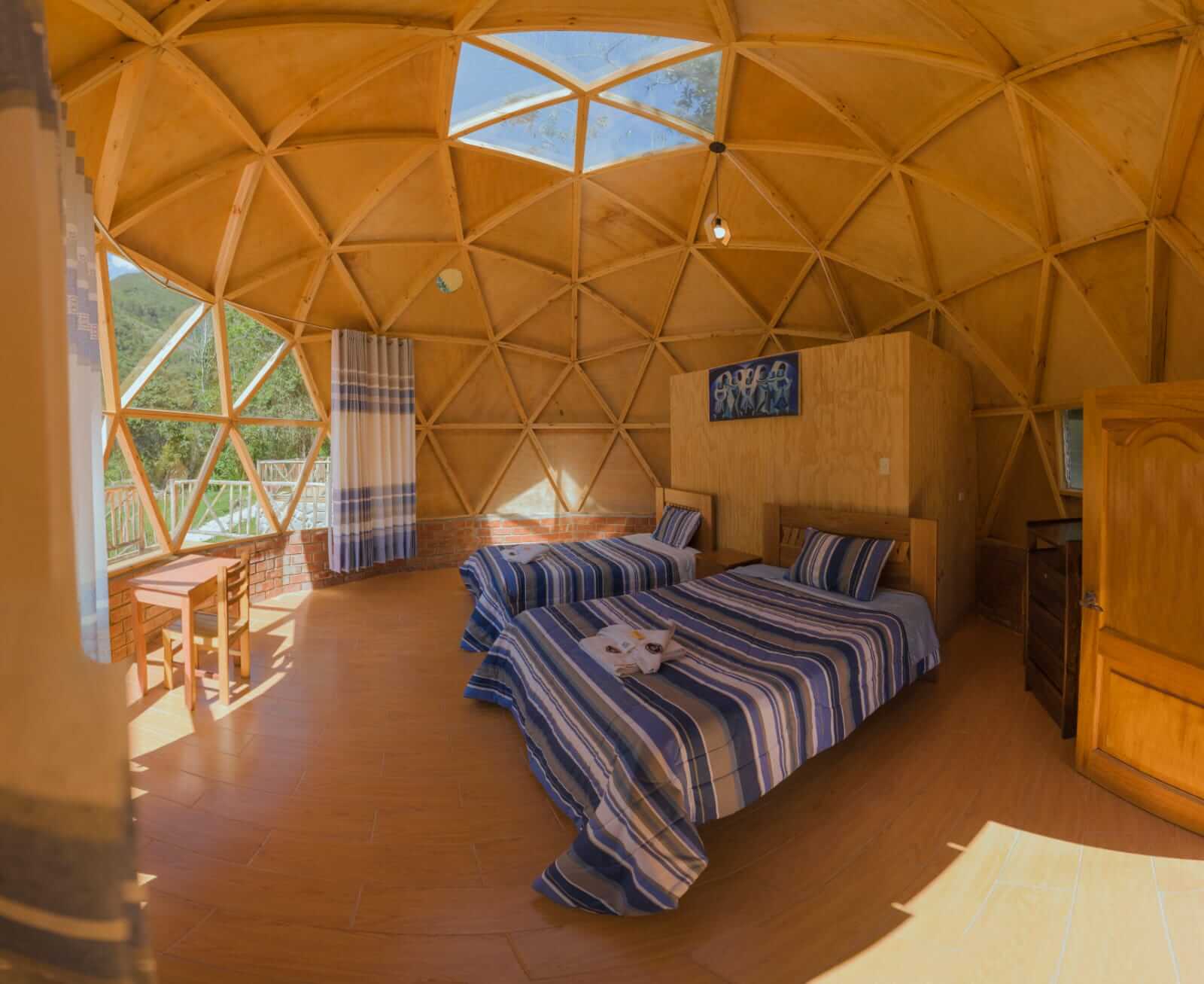
One of the most common questions before the Salkantay Trek is how disconnected you will be. The answer depends on the section. On some days, you will have signal, power outlets, and hot showers; on others, the nearest bathroom is an hour’s walk away and your phone is useful only as a camera. Knowing what services are available along each part of the route lets you tell your family when to expect news, charge your devices in time, and, above all, know where medical care is available if something goes wrong.
Cell phone signal
Coverage on the Salkantay route is unreliable and varies depending on your mobile provider. In general, the rule is simple: the higher you go, the less signal you will have.
In Mollepata, the signal is good. In Soraypampa, it appears intermittently and at some points around the campsite. Between Soraypampa and the descent from the pass, there is virtually no coverage. Signal returns weakly in Chaullay and Collpapampa, improves in La Playa and Santa Teresa, and is fully available in Aguas Calientes.
If you need to stay connected, buy a Peruvian SIM card in Cusco before leaving. Foreign SIM cards on roaming usually have even less coverage in rural areas. Let your family know that on the second day, the pass-crossing day, you will probably not be able to send messages.
Internet at the campsites
Some campsites offer satellite internet for a fee, usually for a limited amount of time. It works for sending messages and checking email, but not for video calls or uploading large photos.
Do not rely on it as a guaranteed service. It depends on the weather, the number of people connected, and whether the equipment is working that day.
Electricity and device charging
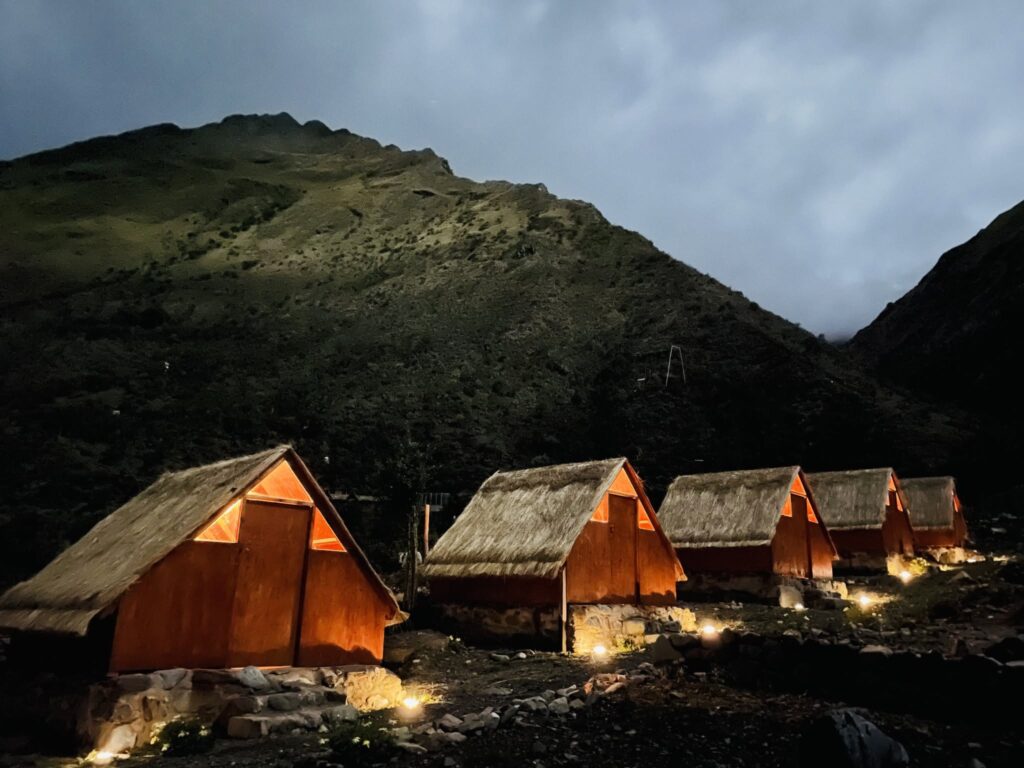
In the high-altitude section, electricity is limited. Campsites in Soraypampa usually run on solar panels or generators with limited operating hours, and outlets, if available, are shared among many travelers.
From Collpapampa onward, the situation improves. In La Playa, Santa Teresa, and Aguas Calientes, there is grid electricity.
The practical solution is to bring a high-capacity power bank, fully charged in Cusco. It will cover your first two days without relying on outlets along the route. The cold in the high-altitude section also drains batteries faster, so keep your phone close to your body at night.
Bathrooms along the route
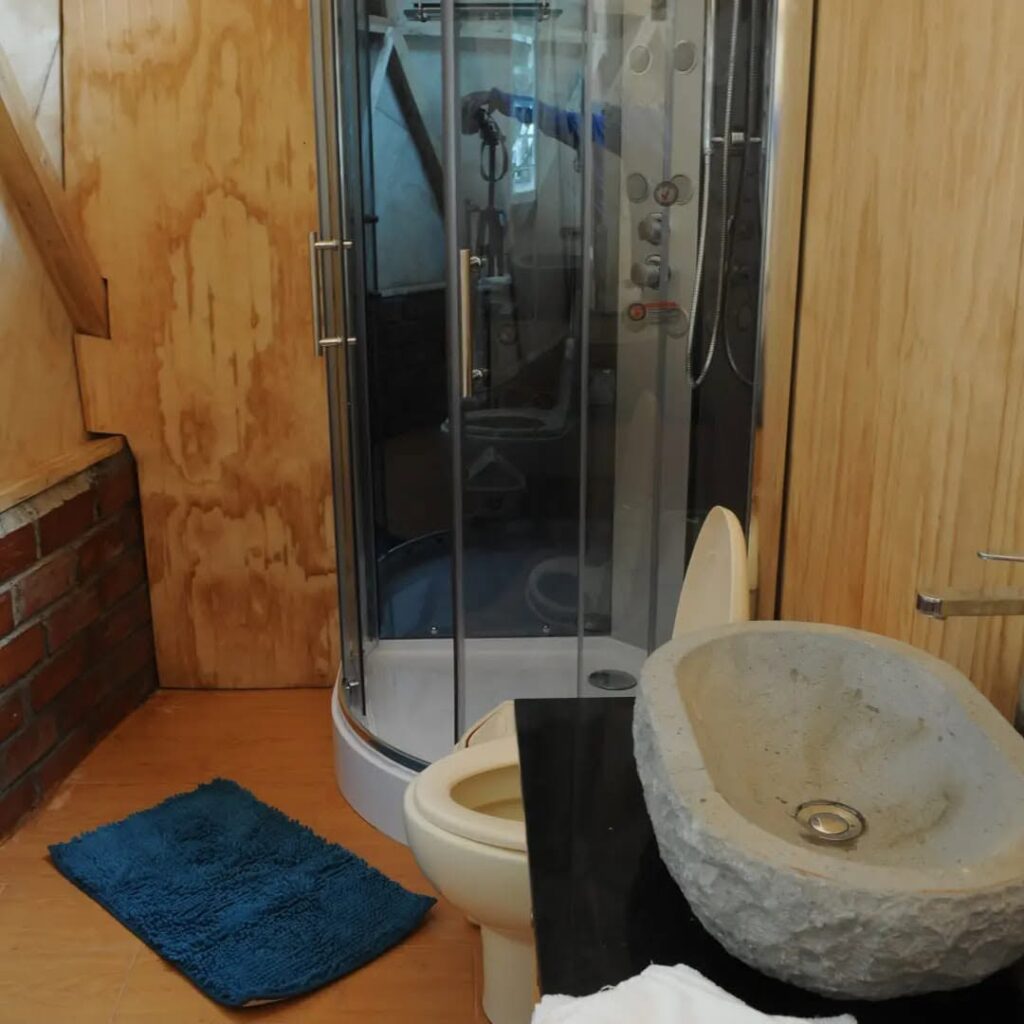
All campsites have bathrooms, although quality varies greatly: from flush toilets to basic latrines. Some agencies also bring a private portable toilet for their group.
Between campsites, bathrooms are available at rest and lunch stops, and several charge a small fee. The longest section without a bathroom is the ascent and descent of the Salkantay pass.
Always carry toilet paper and hand sanitizer in your daypack. Many bathrooms along the route have neither.
Showers and hot water
On the first night, in the high-altitude section, a hot shower is not guaranteed. It depends on the type of campsite: domes and lodges usually have them, while tent camps often do not, or they charge extra.
From the second night onward, in the warmer zone, showers are more common. In La Playa and Lucmabamba, most campsites have one, although hot water depends on the time of day and how many people used it before you.
If showering every day is important to you, ask the agency which campsites include showers before booking.
Medical care and health centers
This is the service you should know most about before setting out. Between Soraypampa and Collpapampa, there are no health facilities. In this part of the route, the first response to any problem depends on the guide and the first-aid kit carried by the agency.
The nearest facilities are in Mollepata, at the start, and in Santa Teresa, in the jungle area. In Aguas Calientes, there is medical care and pharmacies. Serious cases are referred to Cusco.
That is why it is important for the agency to carry oxygen and a first-aid kit during the pass crossing, and for your travel insurance to cover high-altitude activities and medical evacuation.
Vehicle access in an emergency
Knowing where a vehicle can reach is key to understanding how an evacuation is handled.
Soraypampa has road access from Mollepata. If someone cannot continue before the pass, the usual procedure is to return to that point and leave by vehicle for Cusco.
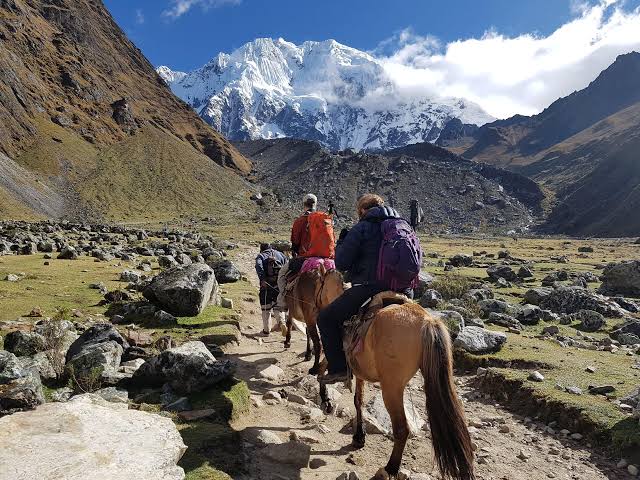
The pass section has no vehicle access. If there is a problem there, evacuation is done on foot or by horse to the nearest point with road access, which may be Soraypampa or, farther down the descent, the Chaullay and Collpapampa area.
From Collpapampa onward, the route once again has road access, and from La Playa there is public transportation to Santa Teresa.
Emergency horses
In the high-altitude section, local muleteers have horses available to transport passengers who cannot continue walking. This is the fastest option on the roadless stretch. For this reason, many agencies bring a support horse with the group during the pass-crossing day.
Luggage storage during the trek
You only take along what fits in the bag carried by the mules and in your daypack. The rest of your luggage stays in Cusco.
Most hotels in Cusco store luggage free of charge for guests while you do the trek, and many agencies also offer this service at their office. Confirm it before leaving and keep your valuables locked up.
Services by route section
This is a general reference for the classic five-day route. Services at each campsite depend on the operator.
| Section | Signal | Electricity | Shower | Health care | Road |
| Mollepata | Good | Yes | Not applicable | Health post | Yes |
| Soraypampa | Intermittent | Limited | Depends on campsite | No | Yes |
| Salkantay Pass | No | No | No | No | No |
| Chaullay and Collpapampa | Weak | Yes | Common | No | Yes |
| La Playa and Lucmabamba | Acceptable | Yes | Common | No | Yes |
| Santa Teresa | Good | Yes | Yes | Health center | Yes |
| Aguas Calientes | Good | Yes | Yes | Medical care and pharmacies | No, train only |
To find out what products you can buy at each of these points, check out shops and kiosks along the Salkantay Trek route.
Frequently asked questions
Which day of the trek will I have no signal?
The second day, when you cross the Salkantay pass. From leaving Soraypampa until the descent toward Chaullay, it is unlikely you will have coverage. Let your family know before leaving the first campsite.
Can I use a satellite phone on the route?
Yes, and it works along the entire route, including at the pass. It is not necessary for most travelers, but some agencies carry one as part of their emergency protocol. Ask when booking.
What happens if I get sick in the high-altitude section of the route?
The guide assesses your condition and follows the agency’s protocol, which usually includes oxygen, rest, and, if you do not improve, descending by horse to a point with vehicle access. From there, transport to a health center is arranged.
Is there laundry service during the trek?
Not at the campsites. The first place with laundry service is Aguas Calientes. Bring quick-drying clothes that you can rinse and hang up in the afternoon if needed.
Are there ATMs along the route?
Not at the campsites. We explain how to plan your cash in the additional expenses you should consider when booking a Salkantay Trek.