


Salkantay means wild or untamable mountain. That is the starting point for this dictionary: over five days, you will hear words that explain the landscape, food, and customs along the route. Here they are arranged alphabetically, with their approximate pronunciation, meaning, and the point on the trek where they usually come up. You can read it from start to finish before traveling or refer to it on the trail whenever you hear something you do not understand.
How to use this dictionary
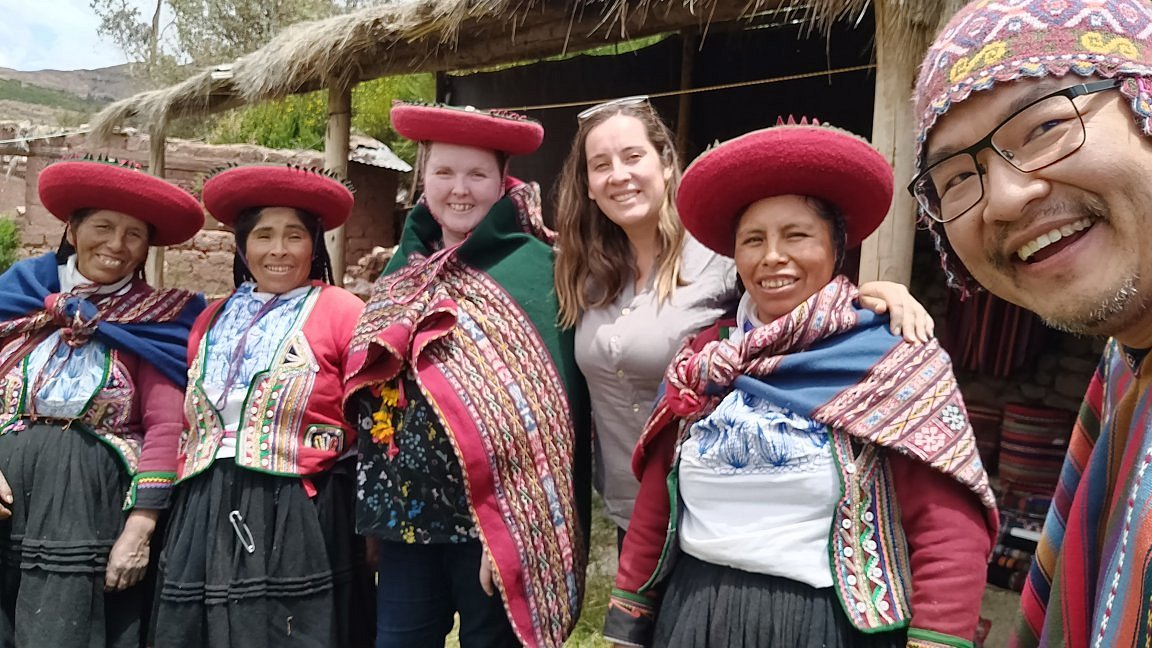
Quechua is Peru’s most widely spoken Indigenous language and, in the Cusco region, the mother tongue of much of the rural population. In the higher part of the route, it is the language used among muleteers and camp families.
The pronunciations are written as they would sound when read in Spanish, without phonetic alphabets. No one will correct you: making the effort matters more than getting it exactly right.
Dictionary from A to Z
| Word | Pronunciation | Meaning | Where you will hear it |
|---|---|---|---|
| Allillanchu | a-yi-yán-chu | How are you? Everything okay? | When greeting someone on the trail |
| Allillanmi | a-yi-yán-mi | I am well | The reply to the previous greeting |
| Apacheta | a-pa-ché-ta | A pile of stones left as an offering at a mountain pass | At the summit of the Salkantay Pass |
| Apu | á-pu | Protective spirit of a sacred mountain | Throughout the trek, especially in front of the snow-capped mountain |
| Ari | á-ri | Yes | In any conversation |
| Ayni | ái-ni | Reciprocity: I help you today, you help me tomorrow | When talking about communities and communal work |
| Canchita | can-chí-ta | Toasted, salted corn | At afternoon tea, every day |
| Chasqui | chás-ki | Messenger of the Inca Empire, who ran along the Qhapaq Ñan | In the guide’s historical explanations |
| Chicha de jora | chí-cha de jó-ra | Fermented corn drink containing alcohol | In highland villages |
| Chicha morada | chí-cha mo-rá-da | Sweet purple corn drink, without alcohol | In diners and restaurants |
| Choclo | chó-clo | Large-kernel tender corn, eaten with cheese | At roadside stalls and in Mollepata |
| Chuño | chú-nio | Potato freeze-dried in the cold highlands | In soups in the higher section |
| Haku | há-ku | Let’s go | When the group sets off again |
| Ichu | í-chu | Tough, yellowish grass of the puna | Throughout the high-altitude section of the route |
| Imaynalla | i-mái-na-ya | How are you doing? | As an informal greeting |
| K’intu | kín-tu | Three coca leaves offered to the apu by blowing over them | Before climbing to the pass |
| Llaqta | iák-ta | Town or settlement | In the name Llactapata |
| Machay | má-chai | Cave | In Huayracmachay, after crossing the pass |
| Manan | má-nan | No | In any conversation |
| Mate de coca | má-te de có-ca | Coca leaf infusion | At all campsites |
| Mote | mó-te | Large-kernel boiled corn | As a side dish in the highlands |
| Muña | mú-nia | Andean mint used as an infusion for digestion and altitude | At campsites in the higher section |
| Pachamama | pa-cha-má-ma | Mother Earth, understood as a living entity | During the offering before crossing the pass |
| Pampa | pám-pa | Plain or plateau | In Soraypampa and Collpapampa |
| Paqo | pá-ko | Andean ritual specialist, also called an Andean master | If your group makes an offering to the earth |
| Qhapaq Ñan | ká-pak ñan | Network of Inca roads that connected the empire | When discussing the route’s history |
| Qocha o cocha | kó-cha | Lagoon | When referring to high-altitude lagoons |
| Salkantay | sal-can-tái | Wild or untamable mountain | From the first day |
| Soroche | so-ró-che | Altitude sickness | Especially on the second day |
| Sulpayki | sul-pái-ki | Thank you | When receiving any kind of help |
| Tambo | tám-bo | Shelter and storehouse on the Inca road | In archaeological explanations |
| Wayra | wái-ra | Wind | In Huayracmachay, the cave of the wind |
Spanish words you will also hear, such as arriero, movilidad, abra, or huayco, are included among the local terms you will hear during the Salkantay Trek.
The five essential words
If you only learn a few, make them these.
- Allillanchu, to greet anyone you meet on the trail.
- Sulpayki, to thank the cook, muleteer, and guide.
- Apu, to understand why the mountain is treated with respect.
- Soroche, because you will hear it on the day you cross the pass.
- Haku, the signal that the break is over.
Quick pronunciation guide
- The ll sounds like the Spanish y: allillanchu is read ayiyánchu.
- The q is deeper than the k, pronounced from the back of the throat.
- The apostrophe, as in k’intu, marks a sharp break at the beginning of the syllable.
- The h is aspirated, like a soft Spanish j.
- Quechua has three vowels: a, i, u. That is why Cusco and Qosqo, or quinua and kinua, coexist.
Words with a story behind them
Three dictionary entries deserve more than one line.
Apu. In the Andean worldview, mountains are not simply scenery but entities with their own character, and permission is requested before crossing their territory. Salkantay is one of the main apus of the Cusco region. Learn how it is honored in the payment to the earth on the Salkantay Trek.
Qhapaq Ñan. The network of Inca roads once stretched for tens of thousands of kilometers and connected territories in several present-day South American countries. The stretch you walk toward Machu Picchu is only a tiny part of that system.
Apacheta. The piles of stones at the pass are neither decorations nor trail markers: each stone was left by someone who crossed before, as an offering for the effort of the climb. If you would like to add yours, do so at an existing apacheta and do not dismantle any you find.
Frequently asked questions
Do I need to know Quechua to do the Salkantay Trek?
No. Guides speak Spanish and, depending on the service, English or other languages. Quechua is a bonus for connecting with muleteers and camp families.
Is the same Quechua spoken throughout Peru?
No. There are several varieties, with differences in vocabulary and pronunciation. The words in this dictionary correspond to the Quechua spoken in the Cusco region.
Why are some words spelled in different ways?
Because different Quechua writing standards coexist, and many words entered Spanish through phonetic transcriptions. That is why you may see Cusco and Qosqo, or Salkantay and Salccantay.
What does Salkantay mean?
It is usually translated as wild or untamable mountain. It gives its name to the snow-capped mountain, the pass crossed on the second day, and the entire route.