


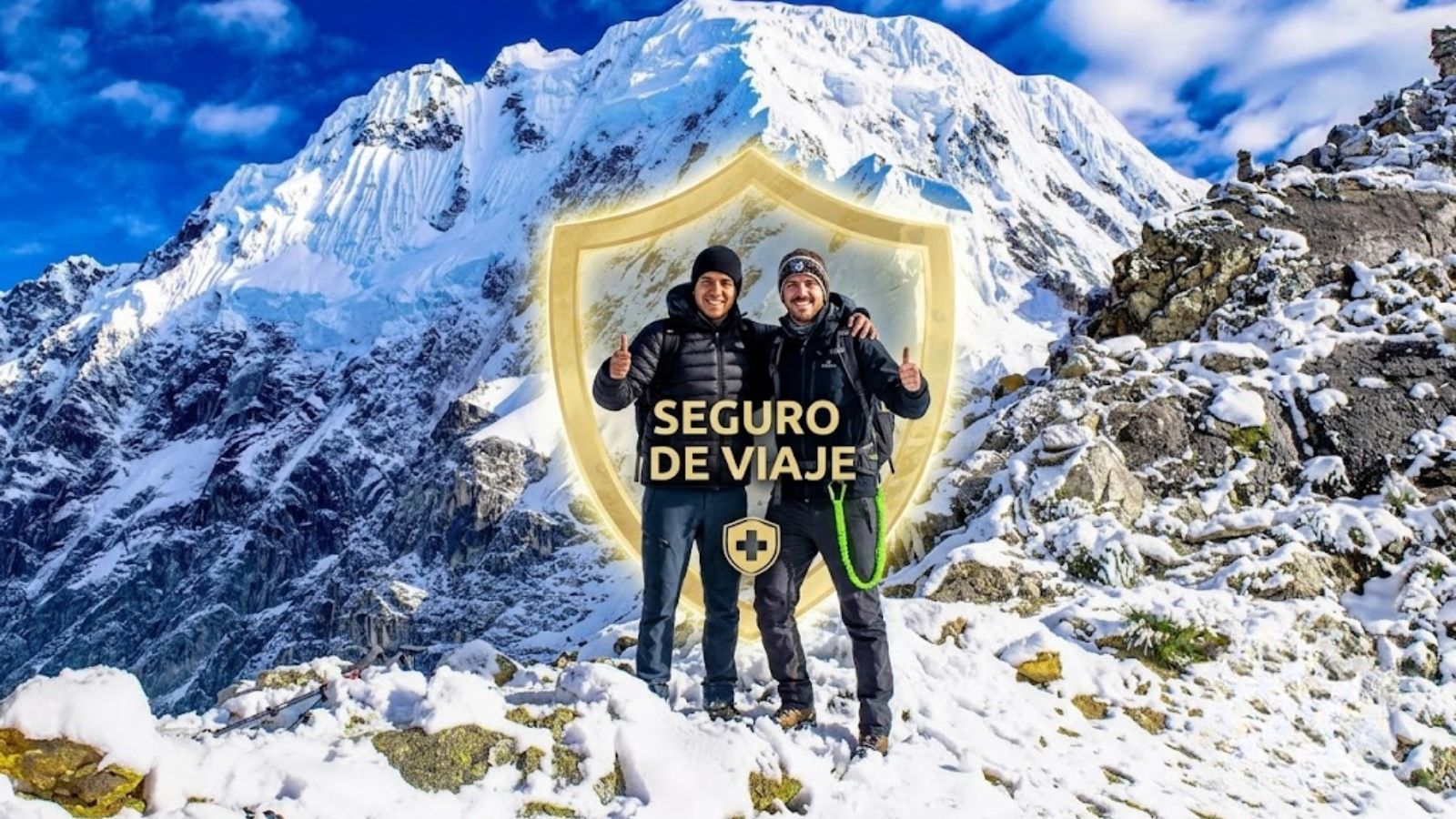
Travel insurance for Salkantay is especially recommended if you are taking the multi-day route, traveling from another country, or want to reduce expenses in the event of an injury, illness, or evacuation. Whether it is mandatory may depend on the operator and the program booked, but the altitude, hiking days, and remote location of some sections make having suitable coverage advisable. Not all travel insurance policies cover trekking, rescue, or medical evacuation, so it is important to review the terms before purchasing.
Is travel insurance mandatory for the Salkantay Trek?
There is no single answer for every traveler. Requirements may vary depending on the agency, type of service, and participation terms of the chosen program. Some departures may allow participation without insurance, while others may require it or expressly recommend it.
Before booking, ask the operator directly whether it requires a specific policy, minimum coverage, or documentation in advance. It is also advisable to confirm whether the assistance included by the agency covers medical expenses or only initial coordination in an emergency.
Tour operator requirements
Some companies may request policy details before departure or require travelers to have coverage for mountain activities. This is usually more common on multi-day routes, where access to medical facilities may take time.
Ask what information you need to provide: policy number, 24-hour assistance phone number, insurer name, and coverage limits. Having these details readily available also helps the guide respond in the event of an incident.
Mandatory insurance and recommended insurance
Mandatory insurance is a requirement imposed by the operator in order to participate. If you do not provide it, the agency may deny your departure or ask you to sign additional documents, depending on its terms.
Recommended insurance is not a contractual requirement, but it aims to reduce the traveler’s financial risk. Even when it is not mandatory, coverage compatible with trekking can prevent high costs for medical care, transport changes, or evacuation.
When it is especially advisable to purchase it
The recommendation becomes stronger when the itinerary involves several days outside Cusco, high-altitude passes, campsites, train connections, or reservations that do not allow changes. In these situations, a medical incident can have a greater impact than the hike itself.
The policy should be reviewed according to the actual itinerary, not just the tour’s commercial name. Check the maximum altitude, duration, means of transportation, and included activities.
When traveling from another country
Your regular health insurance from your home country may not cover consultations, hospitalization, or treatment received in Peru. Even if international coverage exists, it may have limits, deductibles, or upfront payment requirements.
Before traveling, confirm in writing whether your health coverage works in Peru and whether it includes trekking. If it does not, purchase a travel insurance policy that covers both the destination and the activity.
When taking a multi-day route
On a multi-day route, an injury or illness may force you to leave the trek before reaching the planned destination. This can affect campsites, transfers, hotels, trains, entrance tickets, and other booked services.
Trip interruption coverage may help with certain expenses, as long as the reason is covered by the policy. Review the terms, as not every voluntary change is covered.
When hiking in remote areas
Some sections of the Salkantay Trek are far from medical facilities and main roads. Reaching a care facility may require ground transportation, coordination with the operator, and additional time.
That is why checking general medical coverage is not enough. It is advisable to verify whether the insurance includes evacuation from remote areas and under what conditions it is activated.
When pre-existing medical conditions are present
If you have a pre-existing condition, accurately disclose your medical history when purchasing coverage. Omitting relevant information may complicate a later claim or result in coverage being denied.
Review how the insurer defines a pre-existing condition and whether it offers coverage, exclusions, or special requirements. You should also consult a healthcare professional before undertaking a high-altitude hike.
When the trip includes non-refundable services
Tickets, accommodations, trains, and entrance fees may have limited change or refund policies. If you need to cancel for a covered reason, insurance may reduce part of the financial loss, within its limits.
Do not assume every reservation is protected. Keep receipts and review which cancellation reasons the policy recognizes before relying on this coverage.
What travel insurance for the Salkantay Trek should cover
A useful policy for this hike should be suitable for an adventure trip in the mountains. Medical care is essential, but it is also advisable to consider evacuation, repatriation, trip interruption, and baggage protection.
Limits, deductibles, and exclusions can vary significantly between insurers. Read the certificate of coverage and the general terms, not just the commercial summary.
Emergency medical care
Check that the policy covers consultations, hospitalization, tests, medications, and treatments needed during the trip. Verify the maximum medical expense limit and whether you must pay a deductible.
Also ask whether the insurer has an assistance center that can direct you to the appropriate medical facility and authorize direct payments when possible.
Medical evacuation
Medical evacuation covers transportation from an area where adequate care cannot be provided to a facility capable of providing it. On a remote route, this coverage can be as important as medical treatment itself.
Confirm the transportation methods covered and who determines the medical need for the transfer. The decision usually requires authorization from the assistance center.
Repatriation
Repatriation may arrange transportation to your country of residence when medically necessary and authorized. It is not the same as a voluntary return for convenience or a change of plans.
Review whether it covers companions, additional expenses, and medical coordination. The exact terms depend on the policy purchased.
Trip interruption and cancellation
This coverage may reimburse certain expenses if a covered reason forces you to cancel or leave the route. Diagnosed illnesses, accidents, or family emergencies may be included, depending on the plan.
Carefully read the excluded reasons and deadlines for reporting the incident. Decisions made without authorization may affect reimbursement.
Baggage and personal equipment
Insurance may include protection for lost, stolen, or delayed baggage. Review the per-item limits, especially if you bring a camera, phone, glasses, trekking poles, or technical gear.
Keep invoices, photographs, and loss reports when needed. High-value items often have sub-limits and specific custody requirements.
Coverage for trekking and adventure activities
A basic travel insurance policy does not always cover mountain hiking, multi-day trekking, or activities above a certain altitude. The name “travel insurance” does not automatically guarantee coverage for the Salkantay Trek.
Request written confirmation that the itinerary is covered. State that it is multi-day trekking in Peru and provide the maximum altitude indicated by the operator.
Maximum altitude limit
Some insurers set a maximum altitude for recreational activities. If the itinerary exceeds that limit, coverage may not apply even if trekking is listed as included in the policy.
Ask for the maximum altitude of the route you booked and request written confirmation from the insurer that it is covered. Do not rely solely on a verbal response.
Adventure activity exclusions
Check whether trekking, multi-day hiking, remote trails, or mountaineering are listed as excluded activities. Some policies use broad definitions that may affect an organized hike.
If an exclusion is unclear, ask for an explanation before purchasing. Ambiguous coverage can create problems when requesting assistance.
Additional coverage for adventure sports
Some insurers require an add-on for adventure sports or mountain activities. This option may increase the cost, but it can include activities excluded by the basic plan.
Compare the scope of the add-on, not just its price. Check that it includes medical care, evacuation, and the altitude needed for your route.
Guided or independent trekking
Coverage may change depending on whether you do the activity with a guide, through an authorized agency, or independently. Some policies establish requirements regarding professional accompaniment or permitted routes.
Tell the insurer how you will complete the trek. If you are joining a tour, keep booking documents and the itinerary to support a potential claim.
Rescue and medical evacuation are not the same
Medical evacuation and search or rescue are related forms of coverage, but they are not identical. A policy may cover transporting an injured person without necessarily including their location or extraction from a trail.
This difference should be reviewed carefully before purchasing, especially on routes where some sections are far from roads or populated areas.
Search and rescue coverage
Search and rescue may cover locating and assisting a traveler who cannot reach an accessible point on their own. Not all insurers include it as part of medical evacuation.
Ask about financial limits, activation conditions, and whether coverage includes mountain operations. Also check whether prior coordination with the insurer is required.
Transportation to a medical facility
Verify which means of transportation the policy covers and what happens if a combination of vehicles, a stretcher, or other resources available in the area is required. The scope depends on the urgency and local infrastructure.
The insurer usually decides whether evacuation is medically necessary. The operator can help coordinate the situation, but it does not replace authorization from the insurance company.
Prior authorization from the insurer
Many policies require contacting the assistance center first. This allows the insurer to direct you to the medical facility, authorize expenses, and coordinate evacuation.
If the emergency prevents you from calling immediately, seek care first and contact them as soon as possible. Keep medical reports, invoices, and details of the people involved.
Exclusions to review
Exclusions may determine whether a claim is accepted or denied. It is not enough to review the coverage amount: you must read the terms applicable to health, altitude, behavior, and belongings.
If any point is unclear, ask before purchasing. A written response from the insurer may serve as a reference, although the contract terms will always prevail.
Pre-existing illnesses
Check how the insurer defines a pre-existing condition and from what date it considers it to exist. Some policies exclude related treatment, while others offer limited coverage.
Provide accurate information and keep your medications in your carry-on luggage. If you need ongoing treatment, ask in advance whether there will be restrictions during the trip.
Altitude-related issues
Expressly verify that treatment for altitude sickness is not excluded. Some policies cover sudden emergencies but set restrictions according to the activity or altitude reached.
Insurance does not replace acclimatization or a medical assessment. If you experience significant symptoms, inform the guide and avoid continuing on your own without proper evaluation.
Alcohol consumption or other behavior
Alcohol, drug use, or other behavior considered reckless may result in a coverage claim being denied. Each policy defines these exclusions differently.
During the trek, avoid decisions that increase risk, such as leaving the group without notice or ignoring safety instructions. In addition to protecting your health, this reduces potential issues with the insurance.
Traveling against medical advice
An insurer may deny coverage if the traveler undertakes the activity against prior professional medical advice. This may be relevant for people with recent diagnoses or medical restrictions.
If you are unsure about your ability to hike for several days at altitude, consult a healthcare professional before traveling. Keep relevant medical information if you need assistance during the route.
High-value items and equipment
Cameras, phones, and trekking equipment may have low per-item limits. Review the maximum amount, custody conditions, and documents required to file a claim.
Do not leave valuables unattended and bring proof of purchase when possible. A police or carrier report may be mandatory in the event of loss or theft.
When to purchase travel insurance
It is advisable to purchase insurance after confirming the first reservations and before any situation arises that could cause a cancellation. Some coverage begins from the purchase date, not from the start of the trip.
Buying in advance can provide access to cancellation-related benefits, provided that each insurer’s deadlines and requirements are met.
Purchasing it after booking
After booking flights, the trek, or other services, you already know the dates, destination, and activities you need to insure. This helps you choose a policy that matches the actual trip.
Some benefits are subject to specific periods from the initial deposit or from the insurance purchase date. Check these rules before postponing the purchase.
Reviewing coverage dates
The policy should cover the entire trip, from leaving your country of origin until your return. Also consider nights before the trek in Cusco, connections, days afterward, and possible itinerary changes.
Coverage that ends when the trek finishes may leave you unprotected during the rest of your travels. Review the exact dates on the certificate.
Do not wait until the trek begins
Purchasing at the last minute may limit coverage related to cancellations or already known situations. An illness, alert, or issue that existed before purchase will normally not be covered.
A common mistake is purchasing any policy just before hiking without reviewing activities, altitude, and evacuation. Take time to compare terms before the trip.
How much does insurance for the Salkantay Trek cost?
The cost of insurance for the Salkantay Trek depends on age, trip duration, country of residence, destination, medical limits, and included activities. Therefore, there is no single price, and it would not be reliable to provide a fixed figure without an up-to-date quote.
A policy with high-altitude trekking, evacuation, and cancellation coverage generally costs more than a basic travel plan. Compare equivalent coverage before choosing.
Factors that affect the price
Trip duration, country of residence, age, and destination directly affect the price. Higher medical coverage, evacuation, cancellation, and adventure add-ons also increase the cost.
Check whether the plan includes a deductible and whether the stated amount is per person, per incident, or for the entire trip. These details affect the actual value of the coverage.
Why not choose based on price alone
A low-cost policy may have low limits, high deductibles, or exclusions incompatible with the itinerary. If it does not cover trekking or altitude, its low price provides no useful protection for this route.
Prioritize coverage for the activity, altitude, and evacuation. Then compare the final cost among options that truly meet your needs.
Deductibles and maximum limits
The deductible is the amount the traveler must initially pay before coverage applies, according to the contracted terms. Maximum limits indicate how much the insurer will pay for each category.
Check the limits for medical expenses, evacuation, baggage, and cancellation. A high overall limit may not be enough if there are low sub-limits for key items.
What to ask the insurer before purchasing
Before purchasing, ask specific questions and keep the answers. This reduces ambiguous interpretations when you need to use the policy during the trip.
Describe the route precisely: multi-day trekking in Peru, maximum altitude, remote areas, and participation through an agency or independently.
Does it cover trekking at the route’s maximum altitude?
Provide the activity name, destination, and maximum altitude of the booked itinerary. Request confirmation that coverage applies at that altitude and for a multi-day hike.
Also ask whether there is a special definition of mountaineering, technical trekking, or excluded activities. The wording used in the contract can change the scope of protection.
Does it include evacuation from a remote area?
Confirm whether it covers ground transportation or other available means to an appropriate medical facility. Ask whether evacuation depends on a medical order or prior authorization.
Also ask whether there are specific limits for mountain transportation. This information is more useful than a general reference to “emergency assistance”.
Does it include search and rescue?
Ask about search and rescue separately, as it is not always part of medical evacuation. Request information about limits, conditions, and types of covered incidents.
Confirm whether assistance includes locating the traveler when they cannot reach an accessible point on their own.
How is assistance requested?
Request the 24-hour phone number, authorization procedure, and documents you will need to submit. Save the contact on your phone and carry a physical copy.
Ask what to do if there is no signal or if the situation requires immediate care. Having this procedure clear avoids unnecessary delays.
Do I need to pay first?
Ask whether the insurer pays the provider directly or whether you must pay first and request reimbursement later. This difference can be important during an emergency outside your country.
Confirm which receipts you must keep and within what period you need to submit the claim. Invoices, medical reports, and proof of payment are usually required.
What documents to bring during the trek
Carry your insurance information in both physical and digital formats. During an emergency, relying only on your phone may be impractical due to battery loss, humidity, or no signal.
Share the main details with a companion or guide when appropriate. There is no need to provide sensitive medical information that is not relevant to safety.
Policy number and emergency contact
Keep the policy number, insurer name, and assistance phone number in an accessible place. Save a copy in your email or in an app available offline.
Share this information with a trusted companion. If you are traveling alone, tell the operator where your documents can be found if needed.
Personal medical information
Include allergies, relevant conditions, medications used, and an emergency contact. This information can help medical staff and the guide make initial decisions more quickly.
Use a clear note, preferably in Spanish and English if you do not speak Spanish. Keep medications identified and in their original packaging when applicable.
Proof and receipts
Keep medical reports, invoices, tickets, transportation receipts, and documents related to any incident. The insurer may request them to review the claim.
If possible, take photographs of documents and keep digital copies. Do not hand over originals without first checking whether the company needs them.
Personal insurance and operator assistance
Booking a tour with emergency protocols does not necessarily replace individual insurance. The agency may provide first aid, communication, and coordination, but its services do not always cover medical expenses or travel changes.
Before departure, clearly distinguish what the operator provides from what your policy covers. This information prevents incorrect expectations during an emergency.
What assistance the agency provides
Ask about the first-aid kit, communication methods, evacuation procedure, and support available to the traveler. Also ask who makes the initial decisions if someone needs to leave the route.
If you need to confirm logistical details of the itinerary or departure protocols, you can consult them directly with the Salkantay.tours team before booking.
What expenses the traveler pays
Confirm who pays for additional transportation, medical care, accommodation, train changes, or itinerary modifications. Some expenses may be the traveler’s responsibility and later claimable through insurance.
Do not assume an evacuation coordinated by the agency will be free. Request information about potential costs and the payment procedure.
Coordination between operator and insurer
In an emergency, the traveler should provide the guide with the information needed to contact the assistance center. The operator can explain the location and support local coordination.
The insurer, in turn, usually authorizes care or transportation according to its terms. Maintain communication with both parties whenever the situation allows.
Frequently asked questions
These answers provide guidance on the most common questions, but the final terms depend on the agency and the policy chosen.
Can I do the Salkantay Trek without insurance?
It will depend on the requirements of the operator and the program booked. Some agencies do not require it as a condition of participation.
Even so, having suitable coverage is highly recommended because of the altitude, multiple days of hiking, and distance from some medical facilities.
Does basic travel insurance cover trekking?
Not necessarily. Many basic plans cover conventional tourism but exclude multi-day trekking, adventure activities, or routes above a certain altitude.
Review the included activities, exclusions, and altitude limit before purchasing.
Does insurance cover altitude sickness?
It depends on the policy terms. Some cover medical care for sudden symptoms, while others apply restrictions related to altitude or excluded activities.
Confirm it expressly with the insurer before purchasing, and do not replace acclimatization with insurance protection.
Is evacuation always included?
No. It may be sold as separate coverage, have specific limits, or require authorization from the assistance center.
You should also ask whether it includes search and rescue, as the two types of coverage are not necessarily equivalent.
Does insurance cover leaving the trek due to fatigue?
Fatigue without a covered medical cause may normally be treated differently from an injury or diagnosed illness. Voluntary interruption does not always result in reimbursement.
Review the covered reasons and report any discomfort to the guide and insurer if you need assistance.
What happens if the agency cancels the departure?
It will depend on the operator’s policy, the reason for cancellation, and the booking terms. The agency may offer a date change, alternative service, or refund as appropriate.
Insurance may only intervene if the reason is covered by the policy. Keep all communications and receipts related to the cancellation.